The Intervention

The Intervention
You are seated with friends and family then suddenly it begins.
The intervention*: ”You are NOT looking after yourself and your health”. You are a deer in the spotlight. Awkward silence. Your face is red. “It is just so hard” you mumble. What is this? You think to yourself “But I am not an alcoholic.”
They say: “You have a problem! You need to accept it and deal with it.”
You keep your eyes on the floor but deep down you know they are correct. But you are defensive. You look at each one thinking about what you could say back but you know that won’t help.
Your family wants to check you into a clinic to adjust, get sober, calibrate, be re- educated, trained and prepared to return to the real world with all its temptations, distractions and stresses.

Two friends together asked me how I was doing (re PD) so that led me to think of this scenario. It wasn’t anything like an intervention. But then I imagined my friends and family doing an intervention on me like you would to an alcoholic. I had been struggling with consistency in my Parkinson’s Disease exercises. Everyone needs to know or should know that the only way to prevent the disease getting worse is to exercise, so I need to be disciplined. It will always be a challenge.

Talking about my health is public domain. I have made it that way but sometimes the cheeky side of me wants to say let’s talk about you:
“If you were subject to an intervention — what would it be about? Health, bad habits, emotional issues, eating or exercise …. Fill in the blank. Would you welcome the intervention? Would you want to make changes?
We all have problems we need to deal with and we all go through ups and downs in looking after ourselves. I would suggest you get help (professional or other support) or an accountability partner or system. This helps me. I hope someone close to you is willing to help you but hopefully it doesn’t need to be an intervention.

PS. I would like to go to such a Parkinson’s Disease clinic in the near future though it won’t be like drug or alcohol rehabilitation I am sure I will come away re-trained and ready to fight Parkinson’s Disease in a better way.

*An intervention is an orchestrated attempt by one or many people – usually family and friends – to get someone to seek professional help with an addiction or some kind of traumatic event or crisis, or other serious problem (wikipedia).

La intervención

Estás sentado con amigos y familiares, entonces de pronto comienza.

La intervención: “No estás cuidando a ti mismo y a tu salud”. Eres un ciervo en el centro de atención. Silencio incómodo. Tu cara es roja. “Es tan difícil” murmuras. ¿Qué es esto? Piensas para ti mismo “Pero no soy un alcohólico”.

Dicen: “¡Tienes un problema! Necesitas aceptarlo y lidiar con eso ”.

Mantienes tus ojos en el piso, pero en el fondo sabes que son correctos. Pero usted está a la defensiva. Mire a cada uno pensando en lo que podría decir, pero sabe que eso no ayudará.

Su familia quiere inscribirlo en una clínica para adaptarse, mantenerse sobrio, calibrar, ser reeducado, capacitado y preparado para regresar al mundo real con todas sus tentaciones, distracciones y estrés.

Dos amigos me preguntaron cómo estaba (re PD), lo que me llevó a pensar en este escenario. No era nada como una intervención. Pero luego me imaginé a mis amigos y familiares haciéndome una intervención como lo harías con un alcohólico. Había estado luchando con la consistencia en mis ejercicios para la enfermedad de Parkinson. Todos necesitan saber o deberían saber que la única forma de evitar que la enfermedad empeore es hacer ejercicio, por lo que debo ser disciplinado. Siempre será un reto.

Hablar de mi salud es de dominio público. Lo he hecho de esa manera, pero a veces mi lado descarado quiere decir, hablemos de ti:

“Si estuvieras sujeto a una intervención, ¿de qué trataría? Salud, malos hábitos, problemas emocionales, comer o hacer ejercicio…. Rellena el espacio en blanco. ¿Te gustaría recibir la intervención? ¿Te gustaría hacer cambios?

Todos tenemos problemas con los que tenemos que lidiar y todos pasamos por altibajos cuidando de nosotros mismos. Le sugiero que obtenga ayuda (profesional o de otro tipo) o un socio o sistema de responsabilidad. Esto me ayuda Espero que alguien cercano a usted esté dispuesto a ayudarlo, pero espero que no tenga que ser una intervención.

  1. Me gustaría ir a una clínica de este tipo para la enfermedad de Parkinson en un futuro cercano, aunque no será como la rehabilitación de drogas o alcohol, estoy seguro de que volveré entrenado y listo para combatir la enfermedad de Parkinson de una mejor manera.

* Una intervención es un intento orquestado por una o muchas personas, generalmente familiares y amigos, para lograr que alguien busque ayuda profesional con una adicción o algún tipo de evento traumático o crisis, u otro problema grave (wikipedia).
Some days…

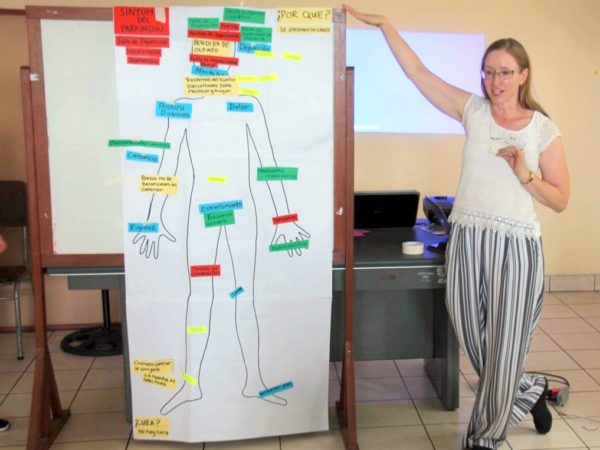
Some days I sense the urgency, other days I want to stay in bed

Some days I am full energy, other days not

Some days I am strong, other days I struggle with one chin-up

Some days I am happy, other days cranky

Some days I go to the gym, other days I don’t.

Some days I am extroverted, other days I want be alone

Some days I am patient with homework, other days I want to give up.

Some days I wish I was a better parent, other days I realise so do most

Some days I pray for healing, other days I accept my situation

Some days I want to do amazing things, other days I remember ‘I have too much on’

Some days I kiss my children goodnight, other days they tuck me in

Some days I feel depressed but most days I am super grateful

Everyday I have Parkinson’s Disease and everyday I need to take drugs

Every day I struggle to walk when my drugs wear off

Everyday I need to be determined, Everyday I need to be strong

Everyday I need to ignore the apathy and push on

Everyday day I make mistakes but then I am guessing so do you.

Everyday I am grateful for husband who sees the positives in me

Everyday I trust God to use me: the good, the bad and ugly

Everyday for better or worse Parkinson’s inspires me…


A friend asked me how my personality has changed – this is my response.

Algunos dias…
Algunos días estoy llena de energía, otros días no
Algunos días estoy feliz, otros días renegona.
Algunos días beso a mis hijos buenas noches, otros días me acostarme temprano
Algunos días soy paciente con la tarea, otros días también quiero rendirme.
Algunos días desearía ser un mejor padre, otros días me doy cuenta de que otras padres sienten igual
Algunos días soy extrovertida, otros días quiero estar sola
Algunos días voy al gimnasio, otros días no.
Algunos días soy fuerte, otros días no puedo hacer mucho
Algunos días ruego por sanarme, otros días aceptó mi vida como es
Algunos días quiero hacer cosas impresionante / dejar un legado, otros días recuerdo que “tengo demasiado para hacer ya”
Algunos días siento la urgencia, otros días quiero quedarme en la cama
Algunos días quiero viajar por todo el mundo, otros días soy realista.
Algunos días me siento deprimida pero la mayoría de los días estoy súper agradecido

Todos los días tengo la enfermedad de Parkinson y todos los días necesito tomar medicamentos
Todos los días necesito ser determinado, Todos los días necesito ser fuerte
Todos los días necesito ignorar la apatía y seguir adelante.
Todos los días lucho por hacer cosas que deberían ser fáciles.
Todos los días estoy agradecido por el marido que ve lo positivo en mí.
Todos los días cometo errores, pero luego pienso que supongo que tú también.
Todos los días confío en que Dios me usarme: lo bueno, lo malo y lo feo.
Todos los días, para bien o para mal, el Parkinson me inspira …

Un amigo me preguntó cómo ha cambiado mi personalidad, esta es mi respuesta.

Body Aching after Exercise : “Makurki”

Makurki

New gymnasts get makurki, even my lil ladies back when they started. OK just an excuse for cute twins picture.

My body is aching – every stretch to pick something up, hurts.
This is the result of yesterday’s gym work out and here they call it “makurki”.
I asked the gymnastic choreographer how to spell that and she laughed and said “I don’t know”.
She didn’t know how to spell it, because it was a Quechua word that gets used around the gym and Spanish-ised (i.e word endings added in Spanish).
I like the word and it is less clunky than the English alternative – ‘delayed onset muscle soreness or DOMS’.

I first came to understand the concept of “makurki” (in English) 20 years ago, when I heard a New Zealand gymnast explain the concept. What he said, made a memorable impression but even more memorable was that he walked on his hands and had the tent full of girls in awe of his gymnastic tricks!
He explained (see website listed below for more information) that when a muscle is stressed, a micro-tear is created in the muscle/s, causing inflammation (DOMS). Our bodies are adaptive and “this demand for increased strength cues it to build more muscle tissue and make us stronger.”
The soreness just means that our body is adapting to the new expectations being placed upon it.
When you get these pains, it is important to stretch as this improves recovery.
So the good news is that I am building up my muscles!

The gymnast went on to say that this analogy relates to life as well, that in life we have micro tears – things that cause pain and soreness, but as we adapt and learn to cope and trust in God, we grow as people.
Our bodies are amazing in the way they adapt and grow to meet our new workout demands and likewise as we trust in our Creator, we must grow as people too.
Life is not easy – everyone has pain but if a person stops because of the pain of one workout or one tough life situation, they will lose the benefits of what could have come next, if they had kept fighting onwards.

Do you have life ‘makurki’? If so, maybe you are ready to grow as a person.
In tough times, I turn to God and yes, it still hurts, but time and stretching helps with the healing. For me, stretching means digging deeper into God’s word and knowing Him.
As for the gym, my makurki comes and goes depending on my workout however it is amazing how strong

we can become, if we push ourselves a bit more each day or week. Don’t give up because it hurts – that is only the beginning.

https://www.menshealth.com/fitness/a19542200/what-is-delayed-onset-muscle-soreness

Makurki

Me duele el cuerpo, cada estiramiento para recoger algo duele. Este es el resultado del ejercicio de gimnasio de ayer y aquí lo llaman “makurki”. Le pregunté al coreógrafo gimnástico cómo deletrear eso y se rió y dijo “No sé”.

No sabía cómo deletrearlo, porque era una palabra quechua que se usa en el gimnasio y en español (es decir, adaptación de palabras al Español).

Me gusta la palabra y es menos torpe que la alternativa en inglés: “dolor de aparición tardía o DOMS en Inglés”.

La primera vez que entendí el concepto de “makurki” (en inglés) hace 20 años, cuando escuché a un gimnasta de Nueva Zelanda explicar el concepto. Lo que dijo, causó una impresión memorable, pero aún más memorable fue que caminó sobre sus manos y tuvo el lugar lleno de chicas con asombro de sus trucos de gimnasia.

Explicó (consulte el sitio web que figura a continuación para obtener más información) que cuando se estresa un músculo, se crea un micro desgarro en el / los músculo (s) que causa inflamación (DOMS). Nuestros cuerpos son adaptables y “esta demanda de mayor fuerza lo impulsa a construir más tejido muscular y nos hace más fuertes”.

El dolor solo significa que nuestro cuerpo se está adaptando a las nuevas expectativas que se le imponen.

Cuando tenga estos dolores, es importante estirarse ya que esto mejora la recuperación.¡Así que la buena noticia es que estoy construyendo mis músculos!

El gimnasta continuó diciendo que esta analogía también se relaciona con la vida, que en la vida tenemos microlágrimas, cosas que causan dolor y dolor, pero a medida que nos adaptamos y aprendemos a enfrentar y confiar en Dios, crecemos como personas.

Nuestros cuerpos son asombrosos en la forma en que se adaptan y crecen para satisfacer nuestras nuevas demandas de entrenamiento y, al igual que confiamos en nuestro Creador, también debemos crecer como personas.

La vida no es fácil: todos tienen dolor, pero si una persona se detiene debido al dolor de un entrenamiento o una situación difícil en la vida, perderá los beneficios de lo que podría haber ocurrido si hubiera seguido luchando.

¿Tienes una vida ‘makurki’? Si es así, quizás estés listo para crecer como persona.

En tiempos difíciles, me dirijo a Dios y sí, todavía me duele, pero el tiempo y el estiramiento ayudan con la curación. Para mí, estirar significa profundizar más en la palabra de Dios y conocerlo.

En cuanto al gimnasio, mi makurki va y viene dependiendo de mi entrenamiento, pero es increíble lo fuertes que podemos llegar a ser, si nos esforzamos un poco más cada día o semana. No te rindas porque duele, eso es solo el comienzo.

https://www.menshealth.com/fitness/a19542200/what-is-delayed-onset-muscle-soreness/


4 day trek with family Huaraz


One of the most challenging but beautiful experiences of my life! I did this amazing trek with my family of 5 in Huaraz in June 2017. It was beautiful, hard work but a growing experience for everyone.

Santa Cruz Trek

We spent a few days around Huaraz getting acclimatized and got up to 4200 metres to test our lungs out. Thankfully none of us got a severe reactions – it just slowed us down which is normal. We drove from Huaraz City to Cashapampa to start the trek (3 hours drive maybe).

Day 1. Starting in Cashapampa  3,425 m

We started with 14 persons from UK, Taiwan, Israel, Spain , Germany and 6 aussies, 5 donkeys, a horse, cook,  and donkey helper and guide. We carried daypacks with lots of water, snacks and a jacket. The donkey’s carried everyone’s gear.


We were told the first day was easy by the eager salesperson. 2-3 hours uphill starting at about 3600 meters was not EASY but thankfully the last 2-3 hours were gentle hills and flats. The hired horse helped us when we got tired. To our surprise Samuel (6) stayed with other tour members at the lead and we couldn’t catch him until we got to camp. He did amazingly and was fed and watered by the group, thankfully.

Day 2 Starting at Llamacorral 3,760

We woke early and after a quick sandwich we set of, trying to keep Samuel with us this time. We walked on semi flat (gentle rise) for about 5 hours then a steep uphill for about an hour before reaching our beautiful campsite at the basin of snow capped mountains. At 4200 meters it was even colder but we all took a cat wash in the freezing creek beside our campsite. Sleep wàs difficult and this time we found ice in the tent.


Day 3. Starting at Taullipampa 4,250 m

We all knew it would be the toughest day and despite our efforts to get up early the freezing temperatures got us. As we started the 4200 to 4700 steep climb I didn’t expect problems early on. Shallow puddles had turned to Ice overnight. It was cold. Despite double coats, beanies and gloves the 3 children started crying

because there hands were freezing. I was fine without gloves but the little ones couldn’t stop their tears. Even their I succumbed to tears of compassion. We tried to insist they keep walking to keep walking to keep warming up because we knew on the horse they’d get cold. But it got worse so we finally asked for a volunteer to ‘not get on the horse’ as only two could ride at once. Annabelle kindly volunteered and we thanked her for her maturity. She took a turn a bit later and soon bounded ahead with the guide. That left David and I taking it real slow up the mountain. We conquered but the kids were squabbling at the top over snack options. Such amazing views and such an achievement were lost over cookies. Yup… I decided to move on quickly knowing the day would be long. It turns out I had no idea how long. At the bottom of the hill we found a heart shaped lake so had lunch and dipped our feet in the freezing lake and I put bandaids on my forming blister.

Amelia struggled at first trying to avoid stepping on donkey poo and mud but thankfully relaxed at least about the mud. I repeatedly explained that we’d wash her shoes later. Annabelle on the other hand relished the mud and at this point completely washed her shoes in the lake.

Of course our guide caught up with and whipped us into action. “You have have 4 hours walking to go!”. Gulp! So we set off at a cracking pace but still lost Samuel who went ahead with the Taiwanese couple. After 2 hours of concentration on the uneven rocky steps I had had it and got a horse ride.

Then it was another two hours walking in the flat in a beautiful shaded valley. Samuel was starting to flag and 20 minutes from camp we spotted the horse handler with “our horse” and assumed Sammy could ride.

BUT no… he was on his way to find the Israele girl(and her boyfriend) was way behind us and her slowness was compounded by her fear of heights on the steep downhill… so we trudged on and finally made it to camp about 5pm (11 hours after we started).

As we waited for dinner we realised the only warm place was the kitchen tent so the kids and I squeezed in and chatted with the cook and the horse man and guide who doubled as assistant cooks. Cold temperatures forced us to bed early we squeezed into our tiny tents for the final time.

Day 4: To Vaqueira 3850M

The prospect of 4 day old bread for breakfast was unappealing so I recommended they make pancakes for breakfast. They had said no but actually did make us one each so that was a nice change. Annabelle had to wear plastic bags as socks because her shoes weren’t dry. We strolled the path by this time scattered with houses on the sides and said hello to villagers as we went (2-3 hours walking). By the final uphill my blister was excruciating so I got a lift to the final hill. I limped up in one shoe but in good spirits to have made it to the end.

The drive out was spectacular indeed! We wound around crystal lakes on rough roads, a snowy mountain on each side of the car.

The highlight was seeing Peru’s biggest peak – Huascarán (6,768 m) up close and looking down the nearby valley to the green watered lakes.

We roasted and marshmallows and made damper on at open fire at our hotel and enjoyed the snowy mountain views for the last time.

It was worth it and an experience of a lifetime. Such a beautiful trek! Photos don’t do it justice at all. It’s also a less expensive alternative to The Inca Trail though a

different region of Peru. This trek was less luxurious but more beautiful. They’re both tough walks but no horses are permitted on the Inca Trek so the kids are not ready for that yet. In terms of Parkinson’s I  took some extra drugs for energy. Tough but worth it. 

Breathtaking views from camp on day

Day 3, hard climbs behind us

Depression and Apathy

Depression is common in parkinson’s sufferers, but not just because of the deterioration the disease causes

At conversation club for English learners

and the fear of such a bleak future. Parkinson’s causes a lack of dopamine (the happy substance in the brain) this increases a sufferer’s potential for depression. So it is hard for parkinson’s sufferers to be motivated and proactive. They don’t get the dopamine hit from exercise. Their ability to produce of dopamine is limited. PD suffers may just feel tired or exhausted.

Why tell you this? I think it is because sometimes I don’t want to go to my work or exercise. I lack motivation, not because I am lazy, but the disease makes me more apathetic. One friend with PD gets down easily and feels sad a lot of the time. This can be tougher for Peruvians who feel the need to hide their sickness and who stay home a lot.

There is one man with PD who taught himself to walk normally again through extreme concentration and other methods (it is a long story). This man travels the world and his country trying to motivate others with PD to exercise. He finds only 25% are able to follow his advice. Intriguing isn’t it? He is a unique person for sure, but also the apathy and depression experienced by those with PD must play their part in such a low response to his encouragement.

Thankfully, I usually get a buzz from seeing people connect the dots when I teach, or see people encouraged and growing as a person. I get joy from being with others and helping them. SO I have learnt to try to focus on others not myself and not just stay at home, which can lead to more depression. I still have my moments, but right now feel protected from depression. Going out, working and exercising helps me keep going.

PS. This is a deep topic. I only hit the tip of the iceberg here.

La depression y apatía

La depresión es común en los enfermos de Parkinson, pero no solo por la disuasión de las enfermedades y el temor a un futuro tan sombrío. La falta de dopamina, la chemica de felicidad en el cerebro aumenta su potencial de depresión. Por lo tanto, es difícil que el Parkinson sufra motivación, sea proactivo y no produzca dopamina por el ejercicio. Su capacidad para producir dopamina es limitada. La persona que sufre EP puede sentirse cansada o agotada.
¿Por qué decirte esto? Creo que es porque a veces no quiero ir a mi trabajo o ejercicio. Me falta motivación, no porque soy flojo, sino porque la enfermedad me vuelve más apático. Un amigo con PD se deprime y se siente triste la mayor parte del tiempo. Esto puede ser más difícil para los peruanos que sienten la necesidad de ocultar su enfermedad y se quedan en casa mucho.
Hay un hombre con EP que se aprendió a caminar normalmente otra vez a través de la concentración extrema y otros métodos (es una historia larga). Este hombre viaja por el mundo y su país tratando de motivar a otros con Parkinson para que hagan ejercicio. El dio cuenta que solo 20% de la gente on EP siguieron su consejo. Interesante que no tienen motivación. Él es una persona única, sin duda, pero también la apatía y la depresión juegan su parte.
Afortunadamente, suelo sentirme alucinado al ver que las personas conectan los puntos cuando enseño, o veo a la gente motivada y creciendo como persona. Me da alegría estar con otros y ayudarlos. POR LO TANTO, he aprendido a tratar de concentrarme en los demás, no en mí mismo, y no solo a quedarme en casa, lo que puede llevar a más depresión. Salir, trabajar y hacer ejercicio me ayuda a seguir.


How far I have come!

How far I have come!

I invited my new friend with Parkinson’s disease join me in the gymnastics class I am attending. It was a real eye-opener. The coach took it easy on her but is was difficult for her. I kept encouraging her saying that I was like her just a few months ago. Her wrists are stiff and don’t twist, she struggled with balance and flexibility: it is only natural for someone with PD or anyone who has never trained gymnastics before. Usually I am training with gymnasts or dancers so it easy to focus on what I can’t do as they are quite amazing but for a change I found this class relatively easy. After my first class I was aching. It was an encouragement to see my comparative flexibility and strength after months of hard work.

I asked my friend if she liked the class she said “ it was BUENASA ( better than good/ goodest? ) and “I hadn’t realised what I had lost”. She was impressed with me: a nice pat for my ego, but mainly I am happy she wants to improve her health and it has helped her shed that stiffness that Parkinson’s brings to her.  Thankfully this is not a symptom I experience but I have many other areas to work on. I thank God for the progress I’ve made. I am working harder than ever.

¡Cuán lejos he llegado!

Invité a mi nueva amiga con la enfermedad de Parkinson a unirse a mí en la clase de gimnasia a la que asisto. Fue una verdadera revelación. El entrenador se lo tomó con calma, pero fue difícil para ella. Seguí animándola a decir que era como ella hace unos meses. Sus muñecas están rígidas y no se tuercen, luchó con el equilibrio y la flexibilidad: es natural que alguien con EP o cualquiera que nunca haya entrenado gimnasia antes. Por lo general, estoy entrenando con gimnastas o bailarinas, por lo que es fácil concentrarse en lo que no puedo hacer, ya que son bastante sorprendentes, pero para variar encontré esta clase relativamente fácil. Después de mi primera clase, estaba sufriendo. Fue un estímulo para ver mi flexibilidad y fuerza comparativas luego de meses de arduo trabajo.

Le pregunté a mi amiga si le gustaba la clase. Ella dijo “fue BUENASA (¿mejor que bueno / bueno?) Y” no me había dado cuenta de lo que había perdido “. Ella estaba impresionada conmigo: una agradable palmada para mi ego, pero sobre todo estoy contenta de que quiere mejorar su salud y le ha ayudado a arrojar esa rigidez que el Parkinson le produce. Afortunadamente, este no es un síntoma que experimento, pero tengo muchas otras áreas para trabajar. Doy gracias a Dios por el progreso que he logrado. Estoy trabajando más duro que nunca.

Note to a younger me

Notes to a younger me

Sometimes I  wonder what would I have done differently if I could go back to 18 or even 30.  I don’t have too many regrets. If you forced me to mention one regret, it would be not exercising frequently. Sure I went through gym fads occasionally but they never lasted.  I was a little adventurous but never disciplined with sports and I wish I’d set physical aims like learning to dance or learning a sport well and stuck at it. Even 7 years ago at 35 I had less fear of doing a handstand than now.

Why would I want to exercise more? The health benefits of exercise are unquestionable at any age and without Parkinson’s coming into the equation. We all need to exercise. As someone who has Parkinson’s disease those things I could have learnt in my 20’s or 30’s are now much harder to learn, not impossible (believe it or not) but the concentration and dedication required is enormous.

We have our children exercise at least 3 times a week to help them get into good exercising patterns and build muscle memory that will serve them well throughout their life. Some think my girls gymnastics commitment is too much, as it is a lot of hours but I see it as an investment in their overall health and whether they win or not they are gaining excellent discipline. They are used to working hard and can physically and psychologically withstand being pushed a bit harder each session. I didn’t have the same grit growing up.

My children inspire me to work hard because of their passion for gymnastics. I am comfortable in the gym and was brave enough in March to start training gymnastics. Some may laugh at the thought of a plump 42 year old gymnast who hasn’t mastered a handstand yet but come train with me and you might have more respect. It is hard work being behind the class and struggling but I know I am growing stronger daily. With Parkinson’s disease the phrase “use it or lose it” is very true so I am using as much as I can  to improve my health and prevent the advance of Parkinson’s disease.

Today is my 42nd birthday so I am reminded by some I am still young and by others that I am old, but whatever my age I need to keep exercising and forget bygones for now as today influences my future.

P.S. I just found out my gymnastics classmate is one year older than me and she is the best in our adult class. She works very hard and inspires me and I’d never have guessed she was older than me.

Trekking Inca Trail back in 2006.


Notas a un yo más joven

A veces me pregunto qué habría hecho diferente si pudiera volver a los 18 o incluso a los 30. No me arrepiento de como he vivida mi vida. Si me obligaras a mencionar una cosa qué hubiera hecho diferente sería qué .’no hacía ejercicio con frecuencia’. Claro qué hice clases de gimnasia de vez en cuando o por un mes, pero nunca duraron. Sí, aunque era un poco aventurera, nunca fui disciplinada con los deportes y me habría gustado establecer objetivos físicos como aprender a bailar o aprender un deporte y aferrarme a él. Incluso hace 7 años, a los 35 años, tenía menos miedo a hacer una parada de manos que ahora.

¿Por qué querría hacer más ejercicio? Los beneficios para la salud del ejercicio son incuestionables a cualquier edad y sin que el Parkinson entre en la ecuación. Todos necesitamos hacer ejercicio. Como alguien que tiene la enfermedad de Parkinson, las cosas que podría haber aprendido en mis 20 o 30 años ahora son mucho más difíciles de aprender, no imposibles (créanlo o no), pero la concentración y la dedicación requeridas son enormes.

Hacemos que nuestros niños hagan ejercicio al menos 3 veces a la semana para ayudarles a tener buenos patrones de ejercicio y desarrollar memoria muscular que les servirá bien durante toda su vida. Algunos piensan que el compromiso de gimnasia de mis hijas es demasiado, ya que es un montón de horas, pero lo veo como una inversión en su salud general y si ganan o no, están ganando una excelente disciplina. Están acostumbrados a trabajar duro y pueden soportar físicamente y psicológicamente ser empujados un poco más duro en cada sesión. Yo no tuve la misma fuerza al crecer.

Mis hijos me inspiran a trabajar duro por su pasión por la gimnasia. Me siento cómoda en el gimnasio y fui lo suficientemente valiente en marzo para comenzar a entrenar gimnasia. Algunos pueden reírse ante la idea de una gimnasta regordeta de 42 años que aún no domina una parada de manos, pero ven a entrenar conmigo y es posible que tengas más respeto. Es difícil trabajar detrás de la clase y luchar, pero sé que cada día me hago más fuerte. Con la enfermedad de Parkinson, la frase “úsalo o piérdelo” es muy cierto, así que estoy usando todo lo que puedo para mejorar mi salud y prevenir el avance de la enfermedad de Parkinson.

Hoy es mi cumpleaños número 42, así que algunos me recuerdan que todavía soy joven y otros que soy mayor, pero cualquiera que sea mi edad, necesito seguir ejercitándome y olvidarme de los acontecimientos actuales, ya que hoy influye en mi futuro.

Nota extra: Acabo de descubrir que mi compañera de clase de gimnasia es un año mayor que yo y es la mejor en nuestra clase de adultos. Ella trabaja muy duro y me inspira, y nunca hubiera adivinado que era mayor que yo.


My Parkinson’s Disease has lead me to take up gymnastics!

4th Gymnast in the Family

The only way to prevent the progression of Parkinson’s disease is through regular exercise. In March I took up a new discipline: I wanted a trainer who I felt comfortable with, a location I knew, a small class who understood my uniqueness and something that I could do regularly.
I chose gymnastics! Having 3 gymnasts in the family I knew its benefits. It works fle
xibility, balance, coordination and strengthens muscles and it takes commitment.

I go 3-4 times a week for 1.5 hours and though it is a slow process, it is waking up dormant muscles in new stretches. I like going because it helps my body. No handstands on the horizon yet but I do weight 10kg+ more than my classmates who are experienced dancers or gymnasts. These pictures demonstrate increased flexibility.

To be honest I wish I’d done it years ago. Don’t let fear hold you back from something good.

4º gimnasta en la familia

La única manera de prevenir la progresión de la enfermedad de Parkinson es a través del ejercicio regular. En marzo comencé una nueva disciplina: Quería tener un entrenador con el que me sintiera cómoda, un lugar que conociera, una clase pequeña que entendiera mis problemas de salud y algo que pudiera hacer regularmente.

¡Escogí gimnasia! Tenemos 3 gimnastas en la familia, así que conocíamos sus beneficios. Funciona bien para tener flexibilidad, equilibrio, coordinación y fortalece los músculos y requiere compromiso.

Voy de 3 a 4 veces por semana durante 1,5 horas y, aunque es un proceso lento, está despertando los músculos inactivos con nuevos estiramientos. Me gusta ir porque ayuda a mi cuerpo. Todavía no soy capaz de hacer una parada de manos, pero peso 10 kg + más que mis compañeras de clase que son bailarinas experimentadas y gimnastas. Estas imágenes demuestran una mayor flexibilidad.

Para ser sincero, desearía haberlo hecho hace años. No dejes que el miedo te impida algo bueno.

Videos

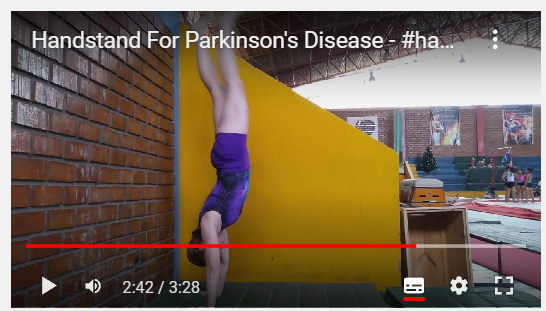
Christine Jeyachandran: 9 years ago at age 37, Christine was diagnosed with Parkinson’s disease in Peru where she lived until recently. It started with a slight tremble, weak fingers and led to left foot dragging and difficulty walking without medication. Gymnastics has changed her life completely and empowered her physically and mentally. Her video Handstand for Parkinson’s was a finalist at the World Parkinson Congress.

Finalist for video Competition 5100+ views
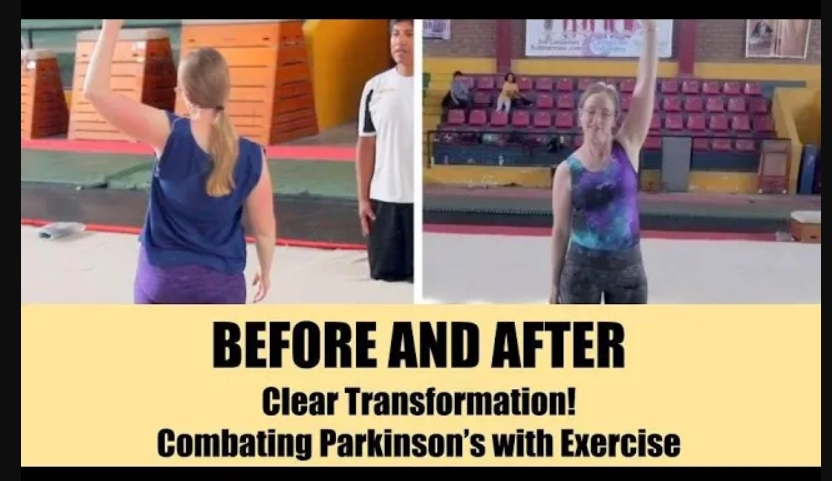
She regained range of movement, balance, flexibility, coordination, and she’s stronger than ever. And her video Before and After shows a huge contrast in how it has changed the way she moves.
In April 2020, Christine edited a video: What are the benefits of exercise?. This shows the amazing stories of 13 people with Parkinson’s from around the World who swear by and implore people with Parkinson’s to exercise with determination and intensity, an apt message during COVID19. Parkinson’s disease never takes a day off.  Video thumbnail: What are the Benefits of Exercise? Parkinson’s secrets to living successfully. Video I of II
Christine herself had to “overcome apathy, doubts, fatigue, and fear” in training gymnastics so she wanted to help others understand the benefits went beyond her story and are worth the effort. This video comes with a sequel discussing “What keeps you motivated” as we know motivation is a big challenge for those with Parkinson’s too! This project was featured in Parkinson’s Life, online magazine.
The video – Would you sell your house to save your mother? Has been had amazing feedback (see poster below) and exposure and was a top 5 in a popular vote for the Focus on Ability Video Competition last year. It has over 44 amazing comments just on their site and many more through social media. It challenges the world to see the needs within the Parkinson’s Latino community.   

Finalist in Focus on Ability Film Festival


I have many videos on my youtube channel.  Please SUBSCRIBE to my youtube 

I’m am amateur video maker but I’m learning so much and I do it to educate people about Parkinson’s most of all so forgive the small errors you might see.

¿Cuáles son los beneficios del ejercicio? Los secretos de 

Parkinson para vivir con éxito. Video 1

What keeps you motivated? Parkinson’s secrets to living 

successfully! Video II of a II part series

What are the Benefits of Exercise? Parkinson’s secrets to living successfully. Video I of II

La perseverancia Ejercicios y Parkinson.

Antes y Después – Christine usaba gimnasia artística para combatir el Parkinson

Homenastics – Hogar-nasia

¿Que es la enfermedad de Parkinsons?

Walk Normally – Christine’s Journey with Parkinson’s #uniteforparkinsons
Made for World Parkinson’s day in April 2018.

One Voice. One Day. This is Christine’s .  #Uniteforparkinsons short version edited by World Parkinson’s Day team.

People all around the world talk about their Parkinson’s #Uniteforparkinson’s official video edited by World Parkinson’s Day team. Parts of my video appear in it.

We are hoping to make more videos in the future and especially in Spanish. If you look you can find Spanish subtitles for the Walk Normally video.

Esperamos hacer más videos en el futuro y especialmente en español. Si busca, puedes encontrar subtítulos en español para el video Walk Normally.