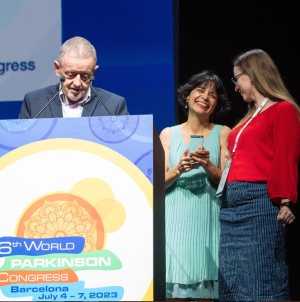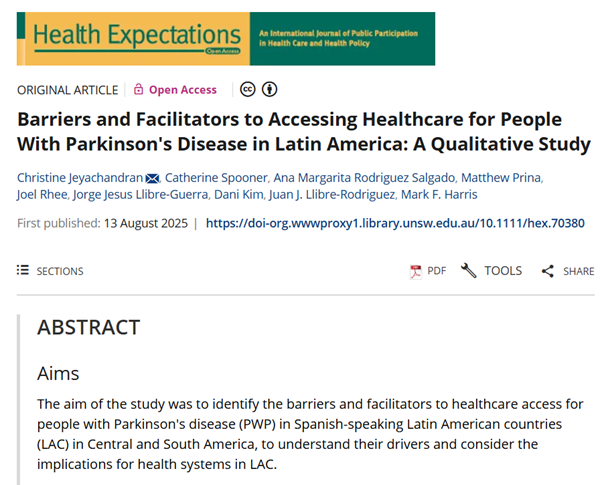
Finally the patient engagement research is published in a peer review journal

For those who have been following my journey: Finally the patient engagement research is published in a peer review journal called Health Expectations.

Title: Barriers and Facilitators to Accessing Healthcare for People With Parkinson’s Disease in Latin America: A Qualitative Study
Link: http://dx.doi.org/10.1111/hex.70380

This all began in 2021 when I was invited by Dr Jorge Jesus Llibre-Guerra to lead the patient engagement for a project funded by the Michael J. Fox Foundation. I was undertaking a Masters at UNSW and secured support from UNSW to supervise the project: Catherine Spooner and Mark Harris. They and Ana who led the groups and Matthew and Jorge have always there for support, albiet timezones away.

I oversaw study design, data collection, and community engagement across 10 countries, with 4 online focus groups across 5 plus time zones at once and in Spanish.As far as we know this is the first patient engagement into the needs of people with Parkinson’s in Latin America.

A big thankyou to everyone who has supported me on this long and challenging journey and expecially my co authors Catherine Spooner, Ana Margarita Rodriguez Salgado, Matthew Prina, Joel Rhee, Jorge Jesus Llibre-Guerra, Dani Kim, Juan J. Llibre-Rodriguez, Mark F. Harris

I believe it is within the interest of research journals to help improve the translation of research , in both senses of the word: language translation and application/usefulness of the research on the ground in a timely way. I want to have an official translation attached as a supplementary document or have it linked as a separate DOI searchable in Spanish.
I chose Healh Expectations journal because it has an excellent reputation of prioritising the voices and interests of patientsw. I will promote my research to the best of my ability but without a Spanish version, the Spanish speakers most affected by the themes of my paper don’t read English and will need to receive this in Spanish. I hope to generate much interest in the Spanish speaking Parkinson’s community.
Non-English speaking countries miss out because the entire academic process is in English. My colleague
Paulo Silva Pelicioni shared with me the following published paper he co-authored that argues for translation of research in detail.
https://www.mdpi.com/2227-9032/11/13/1932

I am in the process of organing the translation and hope all journalsa will pioneer this inclusive and world changing approach to translation of research for better translation and research reach. A change the policy ongoing could have so many impacts on health in Latin America and well beyond.
It is heartbreaking to see my friends with Parkinson’s in Latin America rapidly declining. Let’s hope this research has an impact.

With gratitude and anticipation
Christine Jeyachandran
https://handstandforparkinsons.com/2022/10/10/christines-profile/

PS.
Please get in touch if you have further interest.
I would like to prepare short patient friendly version as well.
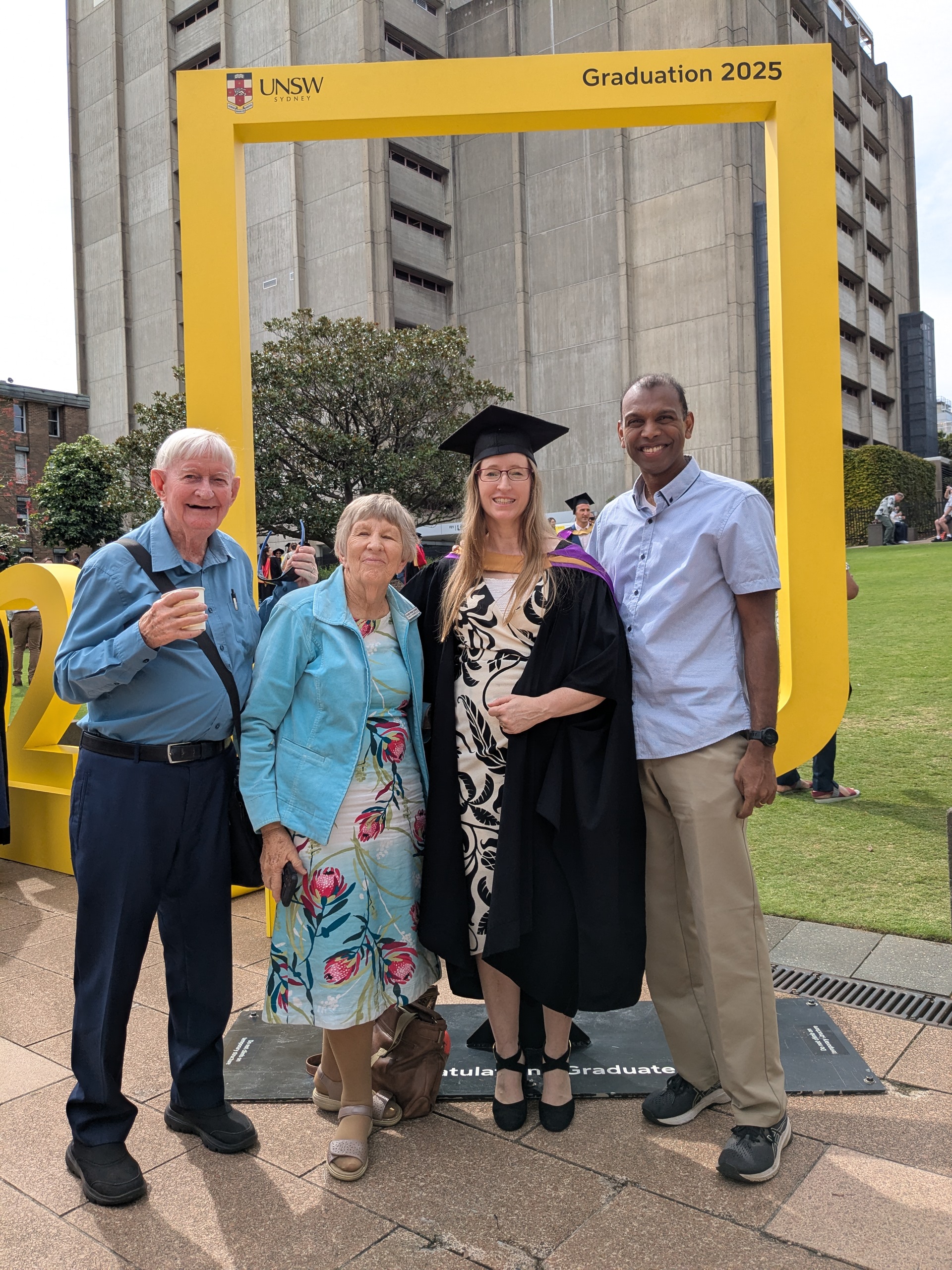
My Masters of Public Health GRADUATION

I started my masters in May of 2020 – yes it was during COVID,  while I was home and a little bit bored. I did many an essay and assignemnt from Peru and often attended tutorials at a strange hour of the night just because I liked connecting with the lecturing staff and learning and asking questions. What was suprising was that the tutorials were quite poorly attended at times and I could get lots of questions asnwered.

I finished of my masters with a big research project which I handed in about a year ago, but I am still working on it to get it published, which is not a part of my masters but is the fruit of the research. The research paper itself is not yet approved for publciation but should  be soon as I have revised it considerably. I will be  recelieved to seee that finished. I gratuated from the University as I had my graduation ceremony in March and my lovely Mum and Dad and husband came to see me graduate . Some fun pictures are below in a video on my youtube channel. Don’t forget to subscribe to my channel Christine Jeya on youtube.

cibe

My blog brings hope and help

I am always amazed at the amazing connections made because of having Parkinson’s. 

This is a Guest blog from lovely Judy who found my blog: The story started when Judy from Georgia USA, did student exchange back in the mid 70’s in Arequipa and she lived with the Guillen family. They ‘adopted ‘her into their family as their daughter.That meant she was ‘adopted into the entire extended family. She keeps in touch with Maria and her husband Diego who has recently been diagnosed with Parkinson’s who she still keeps in touch with (names changed for their privacy)

Fast forward to December 2024:

“I messaged Gabriella to see how Juan was doing and found out that he seemed to be deteriorating quickly. I knew medical resources in Peru are limited as Maria herself sought treatment in Lima (the capital) after she was diagnosed with leukemia several years ago. Thankfully she is in remission. 

I asked how he was and she said he medications didn’t seem to be helping and was frightened she was for him.  No referrals were made to any specialists or support groups. She was in despair! “Que puedo hacer (What can I do)?”

Her words broke my heart. I didn’t know how to answer her, but I began to pray, asking God, “Are there resources for Parkinson’s patients in Peru?” Scrolling through the internet I found Liga Contra de Parkinson’s Arequipa first. I don’t know if the group is active, but it’s a start, I thought, a place for Maria and Diego to connect with others on this journey. My next find was a foundation for Parkinson’s education in Spanish. Resources in her language! Yes! But what appeared next on my screen was miraculous! God heard my prayer!!!! The website for Joni and Friends posted an article titled Unexpected Opportunities to Declare God’s Glory Through Parkinson’s Disease (May 30,2024) In the foreground of the photo stands a smiling, young woman against the backdrop of a city I realized I knew when my eye fell on the volcano Arequipa’s people call, El Misti. That smiling, young woman is Christine Jeyachandran. God had directed me to an individual who is walking the journey of Parkinson’s and who has lived not only in Peru, but in Arequipa! 

   Through reading the article I discovered that Christine writes a blog inspired by her video Handstand for Parkinson’s and it started with her Diagnosis in Peru where she went on to encourage and educate others on this journey on the essential link between exercise and management of the disease. She also makes educational videos in both English and Spanish. I sent all these mentioned resources to Maria and then took a stab in the dark by writing a comment on Christine’s blog, hoping she would respond. In a few days, she did!!!! We set up a time for a 3-way chat-Maria in Peru, Christine in Australia and me in the US. Christine opened her laptop and her memory graciously sharing resources-a doctor, a physical therapist, a support group etc. giving Maria practical help and action steps for helping Diego. Maria is entering this next phase of the journey as a caretaker with renewed hope and gratitude. We as a family are grateful for the connection God made and for the love Christine pours out on those she comes into contact with. 

    To God be all the glory! We are in awe of You, O God, Almighty!

Judy Hamilton                                                                                                                                      January 23, 2025

Thanks Judy. What a blessing it was to meet you all. It’s not easy in Arequipa and the group stubbles along as best they can. Pray that they will have energy to support each other and find good medical resources needed. 

Pictures from Judy’s time in Arequipa. Thanks for sharing

Sharing my story and inspiring others

“You are indeed an ambassador- of hope! Thank-you for the gift of honest, practical help. I know I’m just one of the many your example has touched” wrote Phillip Yancy a well known author.

I had written to Phillip as a response to his blog about his Parkinson’s Diagnosis – I explained, countrary to his belief, that he did not have to give up exercise and adventures as he thought he might have too – as exercise is crucial to help live well with Parkinson’s. (I wrote a bit more of an introduction to myself too)

One of the unexpected joys of my journey with Parkinson’s has been that I have been able to inspire people to have hope despite their diagnosis of Parkinson’s.
I have had so many wonderful and enouraging comments come my way that motivate me to keep sharing my story, even though it may be old news to my readers and others.

– Many have not heard about the benefits of exercirse.
– Many see a Parkinson’s diagnosis as the beginning of the end! (it does not have to be).
– Many are inadvertently fulfilling the prophesy to degenerate (while I try pretty hard to avoid degenerating).

And I keep telling my story because people don’t know the symptoms of Parkinson’s Disease and we need to raise awareness
– so people can get diagnosied early with the disease and get treatment earlier.
– so people can help the people they know diagnosed with Parkinson’s get the care and exervcise support they need.
– and to fight for a cure. My hope is that young people are inspired to go into research to cure Parkinson’s

– Finally the universal nature of the struggle is clear in my story  and has something in it most people can identify with and this helps create empathy.

As I struggle to look after my health – to exercise and to eat well,  I was willing to be vulnerable and show others that we  all need help and through sharing my journey this year I hope to learn from others too.
I am willing to share a bit of my pain and frustration so we can learn together.  Are you willing to turn up everyday?

Please share with me your story too. Sign up for my blog and youtube Channnel.

thanks Christine

PS – My comment to Phillip Yancy is no longer online but you can read his blog by searching his name and Parkinson’s


A Focus On Ability Film Festival Award

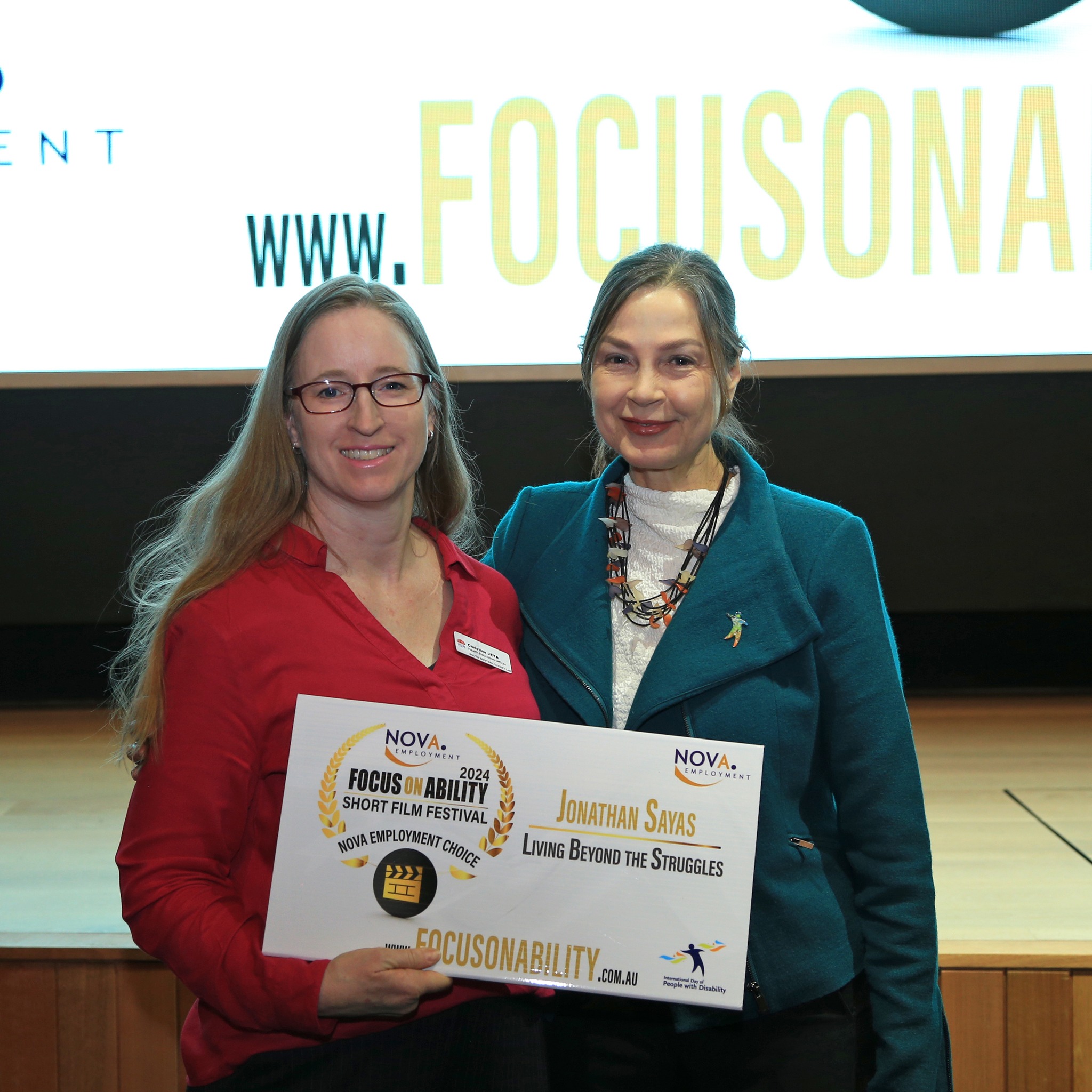
Many of you know my story but recently with some footage from my early years training and Jonathan Sayas made a video which brings a bit more of my recent exercise into the picture. It was a bit rushed so I didn’t expect too much but it was nice to get an award and I picked it up in early September at the NSW showing session out near Liverpool. It was sponcered by NOVA employment and I met Anne, Director of Nova Employment, Martin, CEO and Ryan who runs the competition. Here is a link if you want to watch it.


Getting up for 3am call? No way….

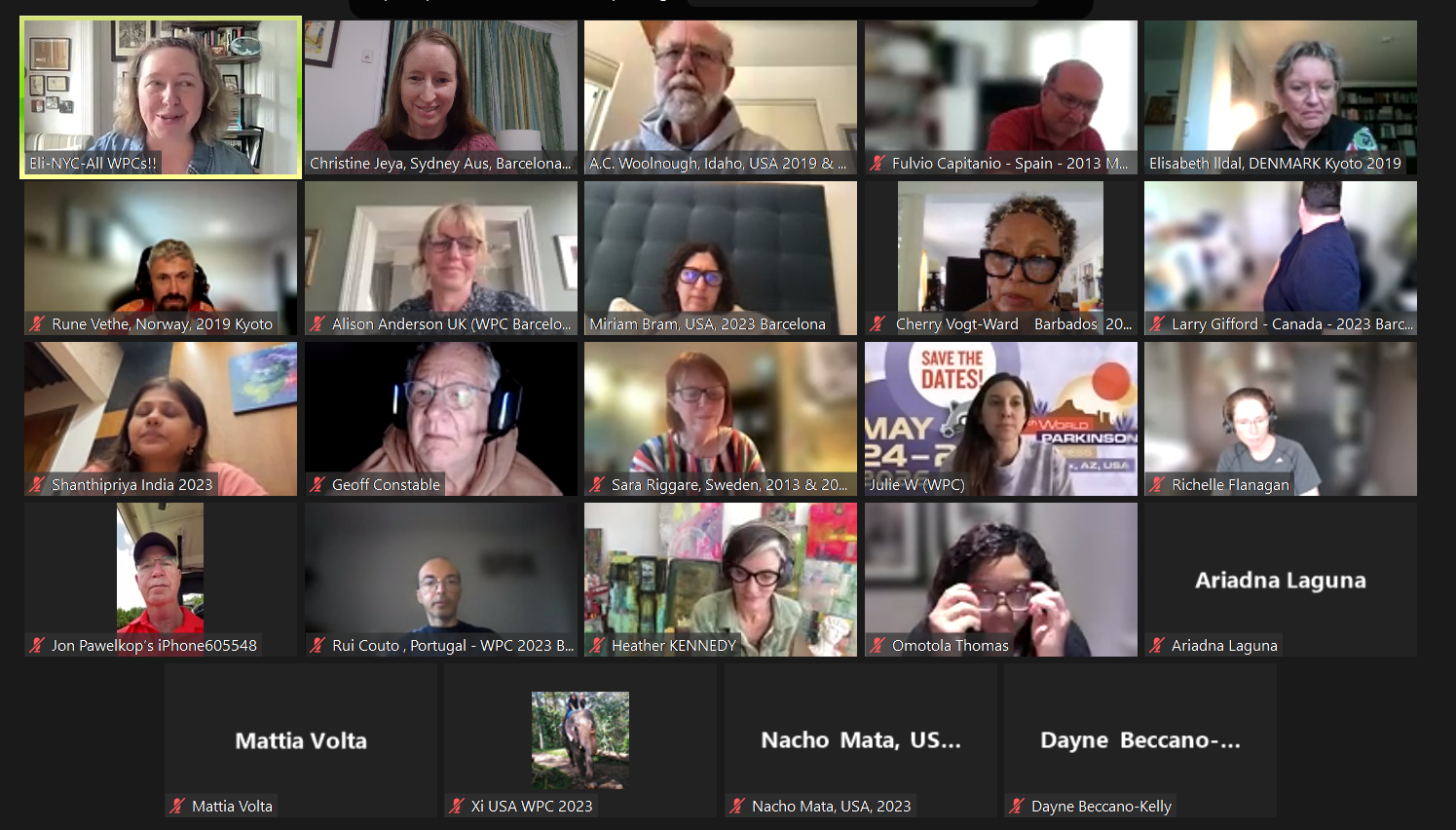
I have been working on research one night in the middle of the night as it is quiet and easier to focus and I was just about to hop into bed when I spotted a reminder for a meeting that was just about to start with the World Parkinson’s Ambassadors and Eli Pollard – executive Director.

Since moving to Australia I don’t get along to many of these international meetings as they fall at 3am Australia time. This time I was wake and I stayed for a wonderful meeting. Considering the WPC now has many ambassadors that were ambassadors who are not active ambassadors for the next conference  to be held in Phoenix. They are looking at choosing the new ambassadors now… as applications have closed recently.

It has been decided that we can call ourselves Alumni WPC ambassadors as many of us are very involved in the congress ongoing but happy to let others have the opportunity to be Ambassadors for Phoennix 2026.

I need to change all my  social media little by little.

I don’t usully get up fro 3am meetings … especially if I have to work the next day – but this night I made an exception.

Too Busy Not To Post

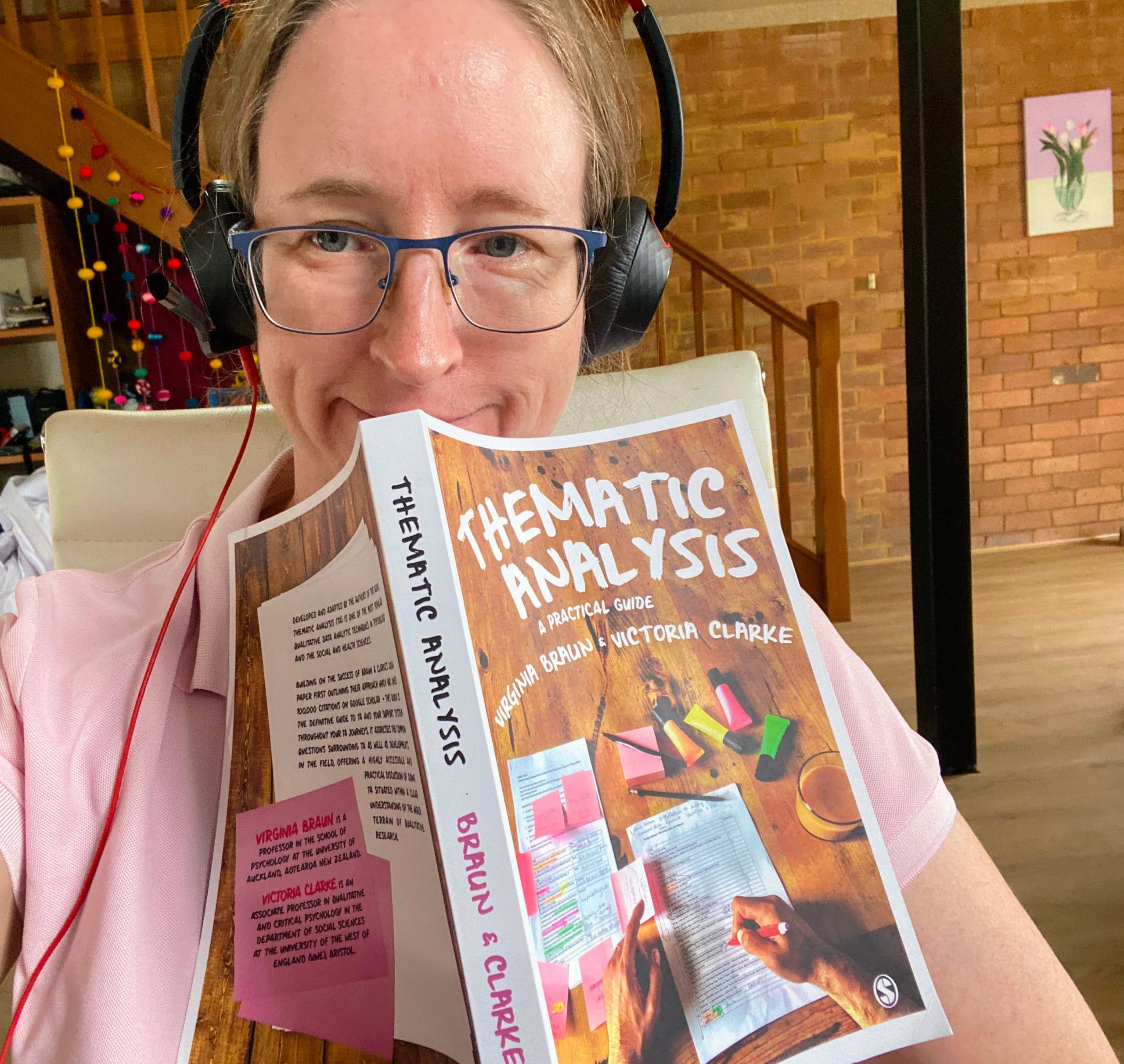
I am quite busy and a bit overwhelmed with life but happy and enjoying immensley the writing up phase of my research. I am leading a Research Project funded by Fox Foundation, under the larger project Parkinson’s Disease in Latin America: Learning from Underrepresented Populations.

My part is a patient engagement into the needs of people with Parkinson’s in Latin America to understand the research priorities for research from their perspective. I don’t want to give it all away but I met 25 facinating people and now I am writing the results up.  Below is a paper from my teambwhich is a good starting point to understand the theme, if you like reading academic papers:

Burden of Parkinsonism and Parkinson’s Disease on Health Service  Use and Outcomes in Latin America

This article received a citation and very positive responce from the Parkinson’s Journal. Congrats to Dani Kim and the whole team.

And now – I better get back to writing up my research results but I value your thoughts and prayers over the next month so I can do this topic justice and help raise awareness of the needs of people with Parkinson’s in Latin America.

I’d like to meet the team at Michael J Fox Foundation and Michael too and explain to them the results.  My hope is that future research projects will help to make change in reality and improve care for people with Parkinson’s in Latin America. Thanks for your support and hopefully once the research is done I will be better a blogging too!

PS. Too busy not to blog is a title slightly stolen from a book some of you may have read back in the day. (If you don’t what I am talking about – Ask me and I can explain).

Chemicals and Parkinson’s Disease – and how the Netherlands has reduced Parkinson’s incidence.

Dr Bastiaan Bloem, famous neurologist is visiting Australia from the Netherlands this month.

Did you know that there has been a 60% decrease in the incidence of Parkinson’s disease in the Netherlands, 1990-2000?

Parkinson’s is rising! Yes – in most countries

Is Parkinson’s is largely man-made? Is Parkinson’s preventable?


Research has shown exposure to certain chemicals used in everyday products and agriculture could be linked to Parkinson’s Disease.
This issue has come into the eye of the Parkinson’s community internationally because a booked called Ending Parkinson’s was published in 2020 telling about the authors investigations and concerns about the connection between Parkinson’s and chemicals. The ‘coincidental’ high rates of Parkinson’s in farmers in the USA is a big part of this book but it is not just limited to agricultural products so keep reading to see what other chemicals are dangerous. 

I have read the book Ending Parkinson’s and recommend it to you all to read, or listen to on Audible. I am not plugging it at the authors request, in fact they are happy to help people get access to the book if they don’t have the means to do so.

The authors and the Michael J Fox Foundation are calling for a ban of the usage of such chemicals. This letter linked explains it well. 

But this is a sensitive issue because the some people could loose a lot of money. In the USA one of the companies involved is denying the issue completely, but reports have been done in Australia by the same company that show that 18 billion could be lost if Paraquat was banned. 

I will leave it to you to check the links provided and decide for yourself. I am not an authority but a person with Parkinson’s. I am not a farmer and though I have lived in rural areas have no clear reason to link my own diagnosis at age 37 to a specific chemical. I am raising awareness  and encouraging people to keep in touch with me on this issue by completing this link and or signing a petition. 

What do the Experts Say?

Dr Bastiaan Bloem on Davis Finney Foundation Webinar

Professor Bloem believes this acceleration is due to environmental toxins, pesticides in particular.

Paraquat, a highly toxic weed killer that has been banned in more than 60 countries but is still used in the US, is a complex 1 inhibitor and is very toxic to the area of the brain that Parkinson’s impacts, the substantia nigra.

Pesticide use began being used worldwide in the 1950s to feed a rapidly growing world population. People can be exposed to pesticides through well water, as well as through the food chain. Because milk in particular has been found to contain high concentrations of pesticides, many Parkinson’s researchers including Professor Bloem believe avoiding or limiting dairy may help prevent Parkinson’s. 


Parkinson’s Foundation: From Parkinson’s Foundation Website

Currently, there are more than 300 lawsuits filed against Paraquat across the U.S. Due to the multitude of cases, a multidistrict litigation (commonly known as MDL) was passed to help accelerate the legal proceeding

From Parkinson’s Foundation Website

————————————–

I know that I haven’t asnwered all the questions that I have raised but there is much to learn from the links below. 

This is more than enough to start your reading and I will write more soon:

Please sign up to keep in touch here!


Links: 

Are you a farmer? And Ending Parkinson’s Disease website https://endingpd.org/parkinsons-and-farmers 

Summary article: 

https://www.theguardian.com/us-news/2022/oct/20/syngenta-weedkiller-pesticide-parkinsons-disease-paraquat-documents

From the Michael J Fox Foundation: 

https://www.biologicaldiversity.org/campaigns/pesticides_reduction/pdfs/2022-11-04_MJ-Fox-Fdn_CA-paraquat-reevaluation.pdf


Documentary: Poisoned Land https://youtu.be/6i2sJwxw5Uc

https://www.theguardian.com/us-news/2023/jun/02/paraquat-parkinsons-disease-research-syngenta-weedkiller

Syngenta:

….but to complicate the situation look what just came out from Syngenta!

Denying all links between Parkinson’s Disease and paraquat. https://youtu.be/DuqG9CTrWMQ?si=olKGBFua8qqX7LQc

But in Australia they’re honest- making money is more important to Syngenta.

https://www.syngenta.com.au/news/viticulture/18-billion-cost-ag-absence-paraquat

Australia

https://amp.theguardian.com/australia-news/2022/jul/11/why-are-pesticides-banned-overseas-still-used-in-australia-and-what-does-it-mean-for-the-environment

https://sbs.com.au/news/article/parkinons-cluster-prompts-calls-for-further-pesticide-research/k03yhlaf0

https://www.theguardian.com/australia-news/2022/sep/27/australian-food-is-grown-with-dangerous-chemicals-banned-in-other-countries

https://apvma.gov.au/sites/default/files/publication/20766-paraquat-toxicology-report-summary-1-26-10-2016.pdf

https://www.fightparkinsons.org.au/about-us/media-release/paraquat-herbicide-and-parkinsons-disease/

au/about-us/media-release/paraquat-herbicide-and-parkinsons-disease/


RAYO DE ESPERANZA ganó el concurso de vídeos elegidos por el público en el Congreso Mundial de Parkinson

THIS ARTICLE APPEAR IN ENGLISH BELOW:

El vídeo de Christine Jeyachandran “Ray of Hope” (“Rayo de esperanza”) ganó el concurso de vídeos elegidos por el público en el Congreso Mundial de Parkinson celebrado a principios de julio.

El vídeo fue presentado en la ceremonia de apertura del Congreso Mundial de Parkinson, ante miles de personas en Barcelona (España). El vídeo cuenta la historia de Ray y Ana María, una pareja Irlandesa-Peruana que vive en Perú y se enfrenta al diagnóstico de Parkinson y al estigma asociado a la enfermedad.

Christine, que padece Parkinson de aparición temprana desde los 37 años, dirigió y editó Ray of Hope. “Ray y Ana María encontraron mi vídeo Handstand for Parkinson’s, que fue finalista en el concurso de vídeos WPC en 2019, en Japón.  Decidimos conocernos ya que ambos vivíamos en Perú y nos hicimos amigos.

Christine decidió hacer un documental para crear conciencia sobre el Parkinson y entrevistó a 5 personas incluyendo a Ray. No ha podido completar este proyecto, pero quedó impresionada por la elocuencia de Ray y decidió hacer “Ray of Hope” (Rayo de esperanza) como cortometraje para el concurso de vídeos del Congreso de 2023.

Ray y Ana María participan en un grupo de apoyo en Lima para personas afectadas por el Parkinson (pacientes y cuidadores). Muchos enfermos de Parkinson se enfrentan a problemas físicos, así también como la depresión y el aislamiento, que agravan su deterioro. Muchos carecen de acceso a información y recursos.

Christine quería que Ray y Ana María asistieran al Congreso para conseguir más recursos para ayudar a las personas con Parkinson de Perú. Puso el vídeo a nombre de Ray, para que si por casualidad ganaba, el premio ayudara a Ray a ir a la conferencia. Christine ya estaba inscrita para asistir y hablar, pero Ray recibió una beca de viaje y apoyo del WPC para ayudarles a llegar hasta allí. Están muy agradecidos.

El vídeo tiene visitas y votos de Perú, Australia, Irlanda, de América Latina y de todo el mundo. Christine y los protagonistas quieren dar las gracias a todos los que han votado y les han ayudado a ganar el premio del público.

Christine dice: “Ray estaba encantado con la victoria. Viajó a España para recibir el premio y su hermano vino desde Irlanda para verle allí”.

Aunque el video de Christine no ganó en 2019, se sintió tan inspirada por el Congreso que creó un grupo de apoyo en su comunidad del sur de Perú, donde vivía en ese momento, y cofundó la Alianza de habla hispana que abogan por una mejor atención e investigación, y fue elegida embajadora del WPC. Ella ve que el congreso ha entusiasmado a Ana María y a Ray.

Ray: ¡Conté mi historia porque quería liberarme! Me sentía oprimido por el Parkinson. Al abrirme al mundo y compartir mi historia creo que me ayudé a mí mismo y a otros a ver la esperanza más allá de la enfermedad.

Christine: “Los comentarios y las reacciones han sido alentadores y esperamos que Ray of Hope desafíe el estigma asociado al Parkinson. Algunos dicen que en el Oeste no existe el estigma, pero ¿por qué tanta gente oculta su diagnóstico? 

Por favor, comparta este vídeo para ayudar a la gente a entender el Parkinson, pero también tenga en cuenta que cada persona experimenta el Parkinson de manera diferente.

https://youtu.be/moq1JRD4qPs