I invited my new friend with Parkinson’s disease join me in the gymnastics class I am attending. It was a real eye-opener. The coach took it easy on her but is was difficult for her. I kept encouraging her saying that I was like her just a few months ago. Her wrists are stiff and don’t twist, she struggled with balance and flexibility: it is only natural for someone with PD or anyone who has never trained gymnastics before. Usually I am training with gymnasts or dancers so it easy to focus on what I can’t do as they are quite amazing but for a change I found this class relatively easy. After my first class I was aching. It was an encouragement to see my comparative flexibility and strength after months of hard work.
I asked my friend if she liked the class she said “ it was BUENASA ( better than good/ goodest? ) and “I hadn’t realised what I had lost”. She was impressed with me: a nice pat for my ego, but mainly I am happy she wants to improve her health and it has helped her shed that stiffness that Parkinson’s brings to her. Thankfully this is not a symptom I experience but I have many other areas to work on. I thank God for the progress I’ve made. I am working harder than ever.
¡Cuán lejos he llegado!
Invité a mi nueva amiga con la enfermedad de Parkinson a unirse a mí en la clase de gimnasia a la que asisto. Fue una verdadera revelación. El entrenador se lo tomó con calma, pero fue difícil para ella. Seguí animándola a decir que era como ella hace unos meses. Sus muñecas están rígidas y no se tuercen, luchó con el equilibrio y la flexibilidad: es natural que alguien con EP o cualquiera que nunca haya entrenado gimnasia antes. Por lo general, estoy entrenando con gimnastas o bailarinas, por lo que es fácil concentrarse en lo que no puedo hacer, ya que son bastante sorprendentes, pero para variar encontré esta clase relativamente fácil. Después de mi primera clase, estaba sufriendo. Fue un estímulo para ver mi flexibilidad y fuerza comparativas luego de meses de arduo trabajo.
Le pregunté a mi amiga si le gustaba la clase. Ella dijo “fue BUENASA (¿mejor que bueno / bueno?) Y” no me había dado cuenta de lo que había perdido “. Ella estaba impresionada conmigo: una agradable palmada para mi ego, pero sobre todo estoy contenta de que quiere mejorar su salud y le ha ayudado a arrojar esa rigidez que el Parkinson le produce. Afortunadamente, este no es un síntoma que experimento, pero tengo muchas otras áreas para trabajar. Doy gracias a Dios por el progreso que he logrado. Estoy trabajando más duro que nunca.
Sometimes I wonder what would I have done differently if I could go back to 18 or even 30. I don’t have too many regrets. If you forced me to mention one regret, it would be not exercising frequently. Sure I went through gym fads occasionally but they never lasted. I was a little adventurous but never disciplined with sports and I wish I’d set physical aims like learning to dance or learning a sport well and stuck at it. Even 7 years ago at 35 I had less fear of doing a handstand than now.
Why would I want to exercise more? The health benefits of exercise are unquestionable at any age and without Parkinson’s coming into the equation. We all need to exercise. As someone who has Parkinson’s disease those things I could have learnt in my 20’s or 30’s are now much harder to learn, not impossible (believe it or not) but the concentration and dedication required is enormous.
We have our children exercise at least 3 times a week to help them get into good exercising patterns and build muscle memory that will serve them well throughout their life. Some think my girls gymnastics commitment is too much, as it is a lot of hours but I see it as an investment in their overall health and whether they win or not they are gaining excellent discipline. They are used to working hard and can physically and psychologically withstand being pushed a bit harder each session. I didn’t have the same grit growing up.
My children inspire me to work hard because of their passion for gymnastics. I am comfortable in the gym and was brave enough in March to start training gymnastics. Some may laugh at the thought of a plump 42 year old gymnast who hasn’t mastered a handstand yet but come train with me and you might have more respect. It is hard work being behind the class and struggling but I know I am growing stronger daily. With Parkinson’s disease the phrase “use it or lose it” is very true so I am using as much as I can to improve my health and prevent the advance of Parkinson’s disease.
Today is my 42nd birthday so I am reminded by some I am still young and by others that I am old, but whatever my age I need to keep exercising and forget bygones for now as today influences my future.
P.S. I just found out my gymnastics classmate is one year older than me and she is the best in our adult class. She works very hard and inspires me and I’d never have guessed she was older than me.
Trekking Inca Trail back in 2006.
Notas a un yo más joven
A veces me pregunto qué habría hecho diferente si pudiera volver a los 18 o incluso a los 30. No me arrepiento de como he vivida mi vida. Si me obligaras a mencionar una cosa qué hubiera hecho diferente sería qué .’no hacía ejercicio con frecuencia’. Claro qué hice clases de gimnasia de vez en cuando o por un mes, pero nunca duraron. Sí, aunque era un poco aventurera, nunca fui disciplinada con los deportes y me habría gustado establecer objetivos físicos como aprender a bailar o aprender un deporte y aferrarme a él. Incluso hace 7 años, a los 35 años, tenía menos miedo a hacer una parada de manos que ahora.
¿Por qué querría hacer más ejercicio? Los beneficios para la salud del ejercicio son incuestionables a cualquier edad y sin que el Parkinson entre en la ecuación. Todos necesitamos hacer ejercicio. Como alguien que tiene la enfermedad de Parkinson, las cosas que podría haber aprendido en mis 20 o 30 años ahora son mucho más difíciles de aprender, no imposibles (créanlo o no), pero la concentración y la dedicación requeridas son enormes.
Hacemos que nuestros niños hagan ejercicio al menos 3 veces a la semana para ayudarles a tener buenos patrones de ejercicio y desarrollar memoria muscular que les servirá bien durante toda su vida. Algunos piensan que el compromiso de gimnasia de mis hijas es demasiado, ya que es un montón de horas, pero lo veo como una inversión en su salud general y si ganan o no, están ganando una excelente disciplina. Están acostumbrados a trabajar duro y pueden soportar físicamente y psicológicamente ser empujados un poco más duro en cada sesión. Yo no tuve la misma fuerza al crecer.
Mis hijos me inspiran a trabajar duro por su pasión por la gimnasia. Me siento cómoda en el gimnasio y fui lo suficientemente valiente en marzo para comenzar a entrenar gimnasia. Algunos pueden reírse ante la idea de una gimnasta regordeta de 42 años que aún no domina una parada de manos, pero ven a entrenar conmigo y es posible que tengas más respeto. Es difícil trabajar detrás de la clase y luchar, pero sé que cada día me hago más fuerte. Con la enfermedad de Parkinson, la frase “úsalo o piérdelo” es muy cierto, así que estoy usando todo lo que puedo para mejorar mi salud y prevenir el avance de la enfermedad de Parkinson.
Hoy es mi cumpleaños número 42, así que algunos me recuerdan que todavía soy joven y otros que soy mayor, pero cualquiera que sea mi edad, necesito seguir ejercitándome y olvidarme de los acontecimientos actuales, ya que hoy influye en mi futuro.
Nota extra: Acabo de descubrir que mi compañera de clase de gimnasia es un año mayor que yo y es la mejor en nuestra clase de adultos. Ella trabaja muy duro y me inspira, y nunca hubiera adivinado que era mayor que yo.
The only way to prevent the progression of Parkinson’s disease is through regular exercise. In March I took up a new discipline: I wanted a trainer who I felt comfortable with, a location I knew, a small class who understood my uniqueness and something that I could do regularly.
I chose gymnastics! Having 3 gymnasts in the family I knew its benefits. It works flexibility, balance, coordination and strengthens muscles and it takes commitment.
I go 3-4 times a week for 1.5 hours and though it is a slow process, it is waking up dormant muscles in new stretches. I like going because it helps my body. No handstands on the horizon yet but I do weight 10kg+ more than my classmates who are experienced dancers or gymnasts. These pictures demonstrate increased flexibility.
To be honest I wish I’d done it years ago. Don’t let fear hold you back from something good.
4º gimnasta en la familia
La única manera de prevenir la progresión de la enfermedad de Parkinson es a través del ejercicio regular. En marzo comencé una nueva disciplina: Quería tener un entrenador con el que me sintiera cómoda, un lugar que conociera, una clase pequeña que entendiera mis problemas de salud y algo que pudiera hacer regularmente.
¡Escogí gimnasia! Tenemos 3 gimnastas en la familia, así que conocíamos sus beneficios. Funciona bien para tener flexibilidad, equilibrio, coordinación y fortalece los músculos y requiere compromiso.
Voy de 3 a 4 veces por semana durante 1,5 horas y, aunque es un proceso lento, está despertando los músculos inactivos con nuevos estiramientos. Me gusta ir porque ayuda a mi cuerpo. Todavía no soy capaz de hacer una parada de manos, pero peso 10 kg + más que mis compañeras de clase que son bailarinas experimentadas y gimnastas. Estas imágenes demuestran una mayor flexibilidad.
Para ser sincero, desearía haberlo hecho hace años. No dejes que el miedo te impida algo bueno.
A few months ago a lady, lets call her Priscila, noticed my shaking hand and one day messaged me that she too had Parkinson’s disease. Very sad news indeed. She was very stressed about it and had not told her two kids, even though it has been a year. I think the stress of trying to hide it and her fears for the future had gotten the better of her.
We met, we talked, we cried, we shared our fears and we read the Bible together as we share the same faith. She said “You seem so strong? How do you do it? I used to be like that, I am the CEO of a company”. I am not sure how I answered that but I reminded her of Paul who had a sickness that he begged God to take away from him but God said “My grace is sufficient for you, for my power is made perfect in weakness”. I explained I have taken this to heart and I have the strength of God’s grace because I am so weak but God is using me by his power. I’d like to be like Paul who chose to celebrate his weaknesses and maybe this blog is a step in that direction.
My new friend said “I need to not focus on myself too much and my problems but on others”. She went away encouraged and less depressed. She later said “I’ve accepted it”. This is a huge step forward.
I went away less alone as Priscila is really a friend. I have met a few PD suffers before but Priscila and I are much closer in age and situation then anyone I have met and we encouraged each other. and exercise together. That is good news out of bad news!
Malo noticias traen buenas noticias.
Hace unos meses, una señora, vamos a llamarla Priscila, notó mi mano temblorosa y un día me envió un mensaje de que ella también tenía la enfermedad de Parkinson. Noticias muy tristes de hecho. Estaba muy estresada y no le había dicho a sus hijos, a pesar de que ha pasado un año. Creo que el estrés de tratar de ocultarlo y sus temores por el futuro se habían llevado lo mejor de ella.
Nos conocimos, hablamos, lloramos, compartimos nuestros miedos y leimos la Biblia juntas mientras compartimos la misma fe. Ella dijo “¿Pareces tan fuerte? ¿Cómo lo haces? yo solía ser así, soy el CEO de una empresa “. No estoy segura de cómo respondí eso, pero le recordé a Pablo que tenía una enfermedad que le suplicó a Dios que le quitara, pero Dios le dijo: “Mi gracia es suficiente para ti, porque mi poder se perfecciona en la debilidad”. Le expliqué que tomé esto en serio y que tengo la fuerza de la gracia de Dios porque soy muy débil, pero Dios me está utilizando por su poder. Me gustaría ser como Pablo, que eligió celebrar sus debilidades y tal vez este blog es un paso en esa dirección.
Mi nueva amiga dijo “Necesito no enfocarme demasiado en mí y en mis problemas, sino en los demás”. Se fue animada y menos deprimida. Más tarde dijo “Lo acepté”. Este es un gran paso adelante.
Me fui menos sola ya que Priscila es realmente una amiga. He conocido a algunos que sufren de EP antes, pero Priscila y yo estamos mucho más cerca en cuanto a edad y situación que cualquiera que haya conocido y nos alentamos mutuamente. Y hacemos ejercicio juntas. ¡Esa es una buena noticia por las malas noticias!
This is what I wrote back in April of 2014 a few months after we found out I had Parkinson’s disease (January 13th).
Christine’s Health – April 2014
It will come as quite a shock to most of you that I (Christine) have recently been diagnosed with early-onset Parkinson’s Disease. I wish we could talk in person but this will have to do for now. Parkinson’s Disease is a degenerative disorder of the central nervous system usually affecting older folk.
On the last day of our holidays we received the diagnosis from a neurologist in Lima. After some tests he could immediately see that my left side had a tremor, stiffness and a general weakness in the fingers (the reasons for the visit). By the grace of God I am generally healthy and strong. Most people do not notice the trembling.
We got a second opinion when we got home to Arequipa, this time loaded with lots of questions and also accompanied by our Doctor (who happens to be our Mission Director here). The conclusion was the same. Recently we have connected by Skype and email with an Australian specialist which is very helpful to us as well. I am taking medicine to help but there is no cure for the disease. To help maintain movement in my body and encourage general strength all over the body it is important to exercise. This can slow progress the disease. So now exercising is an important priority of my time.
We would value your prayers at this time as David and I adjust to the prognosis. The Doctors don’t think it will advance too quickly (only God knows) so at this point we will not change our focus here in Peru. We love it here and since we can get the medicines, health-care and physiotherapy we will continue in what we feel God has called us to. I even taught my first Bible study in our English conversation class this week (written in early Feb) which was exciting as it involved teaching people who don’t know Christ. What a privilege! We pray they will come to know God’s forgiveness and love.
The main impact on me is slight clumsiness on my left side and slowness in typing, both of which I can live with. I do not feel sick though I do get tired. Part of me doesn’t even want to tell people because I don’t want to be seen as a victim or different when I feel so normal but I know that your prayers can do so much. Thank you!
We don’t understand why this has come to us and maybe we don’t fully understand the repercussions just yet as they seem a bit distant but we know we have a God who is faithful and we are trusting him.
“You (the LORD) will keep in perfect peace
those whose minds are steadfast,
because they trust in you.
Trust in the Lord forever,
for the Lord, the Lord himself, is the Rock eternal”. Isaiah 26:3-4
Thank you kindly for your prayers and generosity.
Esto es lo que escribí en abril de 2014 unos meses después de que descubrimos que tenía la enfermedad de Parkinson (13 de enero).
La Salud de Christine – abril de 2014
A la mayoría de ustedes les sorprenderá que yo (Christine) haya sido diagnosticada recientemente con la enfermedad de Parkinson de aparición temprana. Ojalá pudiéramos hablar en persona, pero esto tendrá que esperar por el momento. La enfermedad de Parkinson es un trastorno degenerativo del sistema nervioso central que generalmente afecta a personas mayores.
El último día de nuestras vacaciones recibimos el diagnóstico de un neurólogo en Lima. Después de algunas pruebas, pudo ver de inmediato que mi lado izquierdo tenía temblor, rigidez y una debilidad general en los dedos (los motivos de la visita). Por la gracia de Dios, en general soy saludable y fuerte. La mayoría de las personas no nota el temblor.
Recibimos una segunda opinión cuando llegamos a Arequipa, esta vez cargado de muchas preguntas y también acompañado por nuestro Doctor (quien es nuestro Director de Misión aquí). La conclusión fue la misma. Recientemente nos hemos conectado por Skype y correo electrónico con un especialista australiano que también es muy útil para nosotros. Estoy tomando medicamentos para ayudarme, pero no hay cura para la enfermedad. Para ayudar a mantener el movimiento en mi cuerpo y fomentar la fuerza general en todo el cuerpo, es importante hacer ejercicio. Esto puede retrasar el progreso de la enfermedad. Entonces, hacer ejercicio es una prioridad importante de mi tiempo.
Valoraremos sus oraciones en este momento mientras David y yo nos ajustamos al pronóstico. Los médicos no creen que avance demasiado rápido (solo Dios lo sabe), por lo que en este punto no cambiaremos nuestro enfoque aquí en Perú. Nos encanta estar aquí y, dado que podemos obtener los medicamentos, el cuidado de la salud y la fisioterapia, continuaremos en lo que sentimos que Dios nos ha llamado a hacer. Incluso enseñé mi primer estudio bíblico en nuestra clase de conversación en inglés esta semana (escrita a principios de febrero), lo cual fue emocionante ya que involucra enseñar a personas que no conocen a Cristo. ¡Qué privilegio! Oramos para que conozcan el perdón y el amor de Dios.
El principal impacto en mí es la ligera torpeza en mi lado izquierdo y la lentitud en la mecanografía, con los que puedo vivir. No me siento enferma aunque me canso. Parte de mí ni siquiera quiere contarle a la gente porque no quiero que me vean como una víctima o diferente cuando me siento tan normal, pero sé que sus oraciones pueden hacer tanto. ¡Gracias!
No entendemos por qué nos ha llegado esto y tal vez aún no comprendemos completamente las repercusiones, ya que parecen un poco distantes, pero sabemos que tenemos un Dios que es fiel y confiamos en él.
“Tú guardarás en completa paz a aquel cuyo pensamiento en ti persevera; porque en ti ha confiado. Confiad en Jehová perpetuamente, porque en Jehová el Señor está la fortaleza de los siglos”. Isaías 26: 3-4
Muchas gracias por sus oraciones y generosidad.
My life is full: In my work, with my family, exercising, volunteering for the kids sporting clubs and church. It is easy to get lost in the FULL life and not live it fully.
If you look up ‘Live life to the fullest’ on the internet you find articles about setting goals and bucket lists. Goals are good, but you have to be careful not to become too self-focused. Bucket lists are fun, but can make you less content because you can’t do all the exciting things or go to all the places on your bucket list: I know as I love to travel.
I feel even more urgency because of my Parkinson’s diagnosis. I feel the sense that this life is so fleeting and, although people don’t die in the first world from Parkinson’s disease, one’s quality of life can be affected, so life feels shorter. I want to make a difference in the world.
But the practice of living life to the fullest doesn’t come with a manual, or does it? Jesus says in the Bible (sometimes called “a manual for life”): “A thief comes only to rob, kill, and destroy. I came so that everyone would have life, and have it in its fullest”(John 10:10 CEV).
Other versions says “may have life and have it abundantly” (ESV). This doesn’t refer to assured wealth or health, nor that we’ll always be happy. The Bible has examples of poor and struggling people that God uses and blesses in other ways.
What does it mean to have life in its fullness?
Jesus states just prior to this statement that “I am the gate, anyone who enters through me will be saved”. Jesus says that if we want to be saved, the only way is through Him. It is a choice we must make.
Jesus promises abundance in this life: God gives us “a peace that transcends all understanding” as we turn our anxieties into prayers to God with gratefulness. He also promises us “every spiritual blessing in Christ”, and that nothing can separate us from the love of God.
But my favourite is the grace demonstrated by Paul who had a sickness that God did not heal despite his begging (sound familiar to anyone?) – God said to him: “My grace is sufficient for you, for My strength is made perfect in weakness.”
Paul decided to boast of his weakness which showed God’s grace in him. He is joyful in troubles, trials, times of great pressure, times of confusion and times of despair. But not to his credit, rather “to show that this all-surpassing power is from God and not from us”.
I want to live life to the best of my ability but know that it is only through His grace that I can truly experience an abundant life and learn to remove the “FULL” and rest in the fullness of life in Christ.
I still want to make a difference in the world but only by God’s power and grace (2 Corinthians 9:8).
Bible references
Life to the fullest – Mark 10:10
Through me to be saved – Mark 10: 9
Peace – Philippians 4: 6-9
Every spiritual blessing – Ephesians 1:3
No separation – Romans 8: 38
Joy of Paul in hardship – Throughout 2 Corinthians, 2 Corinthians 12:9
All surpassing power of God – 2 Corinthians 4:7 and 9:8
Por qué “Vivo la vida al máximo”. Mi vida está llena: en mi trabajo, con mi familia, haciendo ejercicio, siendo voluntaria para los niños en el club deportivo y la iglesia. Es fácil perderse en la vida llena de actividades y no vivir al máximo el momento.
Si busca “Vivir la vida al máximo” en Internet, encontrará artículos sobre cómo establecer objetivos y listas de sueños (viajes o experiencias). Los objetivos son buenos, pero debes tener cuidado de no centrarte demasiado en ti mismo. Las listas de sueños son divertidas, pero pueden hacer que tengas menos satisfacción porque no puedes hacer todas las cosas emocionantes o ir a todos los lugares de tu lista de deseos: sé que me encanta viajar.
Siento aún más urgencia debido a mi diagnóstico de Parkinson. Siento la sensación de que esta vida es tan frágil y, aunque las personas no mueren en el oeste a causa de la enfermedad de Parkinson, la calidad de vida de uno puede verse afectada, por lo que la vida se siente más corta. Quiero hacer una diferencia en el mundo.
Pero la práctica de vivir la vida al máximo no viene con un manual, ¿o no? Jesús dice en la Biblia (a veces llamado “un manual de vida”): “El ladrón no viene más que a robar, matar y destruir; yo he venido para que tengan vida, y la tengan en abundancia”(Juan 10:10 NVI)
Un otra versión dice “tengan vida, y para que la vivan plenamente”. Esto no se refiere a la riqueza o la salud aseguradas, ni a que siempre seremos felices. La Biblia tiene ejemplos de personas pobres y luchadoras que Dios usa y bendice de otras maneras.
Qué significa tener vida en su plenitud?Jesús afirma justo antes de esta declaración de que “Yo soy la puerta; el que entre por esta puerta, que soy yo, será salvo”. Jesús dice que si queremos ser salvos, la única manera es a través de él. Es una decisión que debemos hacer.
Jesús promete abundancia en esta vida: Dios nos da “la paz de Dios, que sobrepasa todo entendimiento” cuando pasamos nuestras ansiedades en oraciones a Dios con gratitud.También dice “que nos ha bendecido en las regiones celestiales con toda bendición espiritual en Cristo” y que nada nos podrá separar del amor de Dios.
Pero mi favorita es la gracia demostrada por Paul que tenía una enfermedad que Dios no curó a pesar de su peticiones (suena familiar);
Dios le dijo: “Te basta con mi gracia, pues mi poder se perfecciona en la debilidad”. Paul decidió tener orgullo de su debilidad que demostró la gracia de Dios en él. Él tenía gozo en problemas, sufrimiento, momentos de gran presión, tiempos de confusión y veces de desesperación. Pero no a su crédito, más bien “para que se vea que tan sublime poder viene de Dios y no de nosotros”
Quiero vivir la vida al máximo de mi capacidad, pero sabemos que es sólo a través de su gracia que realmente puede experimentar una vida abundante y aprender no enfocarnos en la vida llena pero y descansar en la plenitud de la vida en Cristo.Todavía quiero hacer una diferencia en el mundo, pero solo por el poder y la gracia de Dios (2 Corintios 9: 8).
Referencias de la Biblia
La vida al máximo – Marcos 10:10
A través de mí para ser salvo – Marcos 10: 9
Paz – Filipenses 4: 6-9
Cada bendición espiritual – Efesios 1: 3
Sin separación – Romanos 8: 38
Gozo de Pablo en dificultad: a lo largo de 2 Corintios, 2 Corintios 12: 9
Todo el poder superior de Dios – 2 Corintios 4: 7 y 9: 8
Do people really want to listen to my ramblings about Parkinson’s Disease? Only time will tell but recently the #uniteforparkinsons campaign invited the disease suffers to make a video of their experience with Parkinson’s Disease. I dragged my family out of bed on a Sunday morning and had them film me walking. Then we did some quick interviews and rushed to edit the video without too much thought.
The results were overwhelming:
Shared 26 times to my knowledge and I’ve received lots of encouraging comments from friends, acquaintances and strangers and lots of prayers….
A short version made by the #Uniteforparkinsons campaign: 32 500 views on youtube 4500 views on facebook 80 shares on facebook
Parts of it was used in their main campaign too.
BUT most importantly (numbers mean less)….it has encouraged me to fight against the disease and encourage others in the process. I have been inspired to start a new fitness regime I’ll explain in another blog and although it is hard it is so good.
My conclusion is that if such a video can be so interesting to people and shared so widely and commented positively then I am sure this blog can be of some benefit to others especially with more thought and planning.
And if not, that is ok – it will keep me accountable in keeping myself fighting the disease.
Banner Photo: Favi Béjar Fotografía
Porque un Blog?
¿La gente realmente quiere escuchar mis ideas sobre la enfermedad de Parkinson? Solo el tiempo lo dirá, pero recientemente la campaña #uniteforparkinsons invitó a la gente que sufre de esta enfermedad a hacer un video sobre su experiencia con el Parkinson.
Saqué a mi familia de sus camas un domingo por la mañana y les hice que me grabaran caminando. Luego hicimos algunas entrevistas rápidas y corrimos a editar el video sin pensarlo demasiado.
Los resultados fueron una sorpresa:
800 + vistas en youtube
Más de 1500 visualizaciones en Facebook
Compartio 26 veces, que yo sepa, y recibí muchos comentarios alentadores de amigos, conocidos y no conocidos y muchas oraciones …
Una versión corta hecha por la campaña #Uniteforparkinsons:
32 500 visitas en youtube
4500 visitas en facebook
80 compartio en facebook
Algunas partes se usaron en su campaña principal también.
PERO lo más importante (los números significan menos) … me ha animado a luchar contra la enfermedad y animar a otros en el proceso. Me inspiré para comenzar un nuevo régimen de ejercicios que explicaré en otro blog y, aunque es difícil, es muy bueno.
Mi conclusión es que si un video de este tipo puede ser tan interesante para las personas y puede ser compartido y comentado positivamente, estoy segura de que este blog puede ser beneficioso para otros, especialmente con más reflexión y planificación.
Y si no, está bien, me siento responsable de seguir en mi lucha contra esta enfermedad.
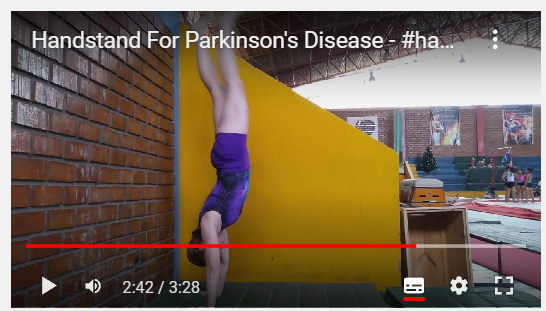
Christine Jeyachandran: 9 years ago at age 37, Christine was diagnosed with Parkinson’s disease in Peru where she lived until recently. It started with a slight tremble, weak fingers and led to left foot dragging and difficulty walking without medication. Gymnastics has changed her life completely and empowered her physically and mentally. Her video Handstand for Parkinson’s was a finalist at the World Parkinson Congress.
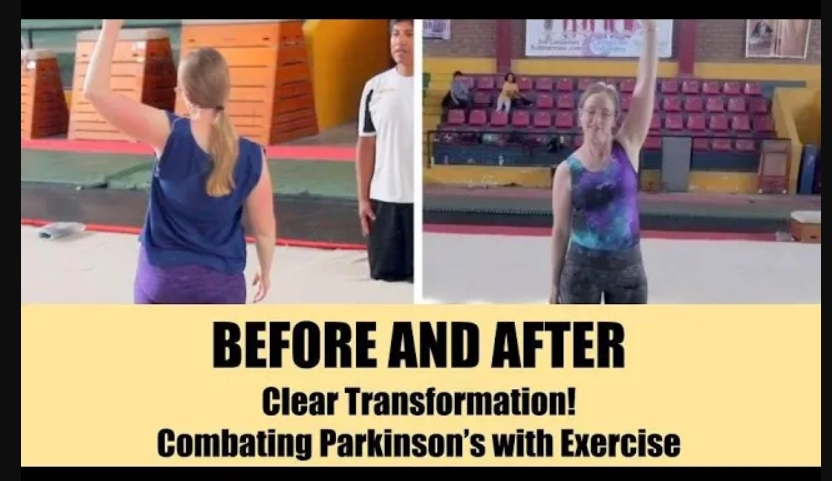
She regained range of movement, balance, flexibility, coordination, and she’s stronger than ever. And her video Before and After shows a huge contrast in how it has changed the way she moves.
In April 2020, Christine edited a video: What are the benefits of exercise?. This shows the amazing stories of 13 people with Parkinson’s from around the World who swear by and implore people with Parkinson’s to exercise with determination and intensity, an apt message during COVID19. Parkinson’s disease never takes a day off.
Christine herself had to “overcome apathy, doubts, fatigue, and fear” in training gymnastics so she wanted to help others understand the benefits went beyond her story and are worth the effort. This video comes with a sequel discussing “What keeps you motivated” as we know motivation is a big challenge for those with Parkinson’s too! This project was featured in Parkinson’s Life, online magazine.
The video – Would you sell your house to save your mother? Has been had amazing feedback (see poster below) and exposure and was a top 5 in a popular vote for the Focus on Ability Video Competition last year. It has over 44 amazing comments just on their site and many more through social media. It challenges the world to see the needs within the Parkinson’s Latino community.
I have many videos on my youtube channel. Please SUBSCRIBE to my youtube
I’m am amateur video maker but I’m learning so much and I do it to educate people about Parkinson’s most of all so forgive the small errors you might see.
Public Speaker and Advocate and World Parkinson Congress Ambassador WPC2022/3 Masters, Public Health, University of New South Wales (2020- 2022). Masters, International and Community Development Deakin University (2004) Graduate Diploma in Divinity (2008), Australian College of Theology/ Morling College (2008 Economics (Social Science) Degree, Honours in Government, University of Sydney (2000)
Christine is a passionate health advocate, driven to improve the lives of people with Parkinson’s through prevention. Christine’s personal story has impressed doctors and physiotherapists around the world as she used exercise to regain her movement for early onset Parkinson’s disease. Her story was shortlisted in World Parkinson’s Congress video competition (Handstand for Parkinson’s). Christine was living in Peru (10 years) and noted to lack os services and even knowledge about the benefits of exercise so she started to education her community and started a local association and launched an International Alliance of Parkinson’s for Spanish Speaking countries to see how they could work together and look for resources. She is the co-principal investigator for an project concerning Parkinson’s epidemiology in Latin America. She use my lived experience to educate and is now breaking stigma and telling other people’s Parkinson’s stories. Christine is almost fluent in Spanish.
From Christine:
I wrote this when I started the blog in 2018, much has changed so read on in the blog.
I’m Christine. I’m Australian but I live in Peru with my family. I was diagnosed with Parkinson’s Disease four years ago when I was 37 – it was a bit of a shock! My left hand shakes so people think I’m nervous. Parkinson’s has damaged my ability to walk and my foot drags. My left arm/ hand also doesn’t move as it should and it trembles. I need to do exercise regularly, which is time consuming, to keep my body from degrenating.
Sometimes I feel sad. This disease has got me too young – I’m only 41. I feel a sense of loss of what I can’t do. I hope I can be there for my children when I’m older and be full of energy and strength.
Sometimes I’m tempted to question why I have Parkinson’s but in the end it doesn’t really matter why but I do know that God has a purpose for me in this. I know that I can be an encouragement to others. I have shared my story with many and serve God despite the hardships of life.
On that note, I am a bible believing Christian. Obviously I understand not everyone has the same beliefs as me but I cannot express myself most honestly without occasional reference to this. So I hope you keep reading nonetheless knowing that no offence is intended if you disagree. It is just “my story”.
PS- I write in Spanish too, whenever I can, because I live in Peru and I feel there are few resources here in Spanish about Parkinson’s disease. I hope to advance people’s understanding of the disease where I live.
¿Quien soy yo?
Hola, soy Christine. Soy australiana pero vivo en Perú con mi familia. Hace cuatro años me diagnosticaron la enfermedad de Parkinson cuando tenía 37 años. ¡Fue un shock!. Actualmente mi mano izquierda tiembla y la gente piensa que estoy nerviosa. El Parkinson ha dañado mi capacidad para caminar y arrastro un pie. Mi brazo y mano izquierda tampoco se mueven como debería. Necesito hacer ejercicio frecuentemente, lo cual lleva mucho tiempo, para evitar que mi cuerpo se deteriore más.
A veces me siento triste. Esta enfermedad me dio demasiado joven, sólo tengo 41 años. Siento la pérdida de lo que no puedo hacer. Espero que pueda estar allí para mis hijos cuando sea mayor y estar llena de energía y fuerza.
A veces me siento tentada a preguntar por qué tengo Parkinson, pero al final no importa el por qué, pero sí sé que Dios tiene un propósito para mí en esto. Sé que puedo animar a otros. He compartido mi historia con muchos y sirvo a Dios a pesar de las dificultades de la vida.
En ese sentido, soy un cristiano que cree en la Biblia. Obviamente, entiendo que no todos tienen las mismas creencias que yo, pero no puedo expresarme con la mayor honestidad sin mencionar mi fe. Así que espero que aun asi sigas leyendo, sabiendo que no se pretende ofender si no estás de acuerdo. Es solo “mi historia”.
Nota: Escribo en español, siempre que puedo, porque vivo en Perú y creo que hay pocos recursos aquí en español sobre la enfermedad de Parkinson. Espero que la gente entienda mejor la enfermedad.