It’s important the act you follow

It is common to have people get on the local buses to sell sweets or biscuits (or perform musically) to get a meagre income but the sales pitch often comes with a story. I was on the bus with Annabelle and there was a salesman selling his booklet of psychological tips. He kind of sounded like a preacher so with nothing to do we listened in. After his spiel he offered a free book to whoever could answer his question. I gave it a try, wrong. Annabelle tried, another tried and then finally the young man next to us tried but he too was rejected. The young man said he’d heard the man before and he changed the answer every time. The man went on and on despite no sales of his booklet. He asked what was the cause of problems in the world. I said ‘sin’. He said no in a long-winded way. Then he asked “how do we find the truth?” I said “In the Bible” but my pre teen was getting embarrassed by my involvement so I went quiet while he went on about the good in the Bible, rich pastors, then that the expectation of 10% as offering to the church, and that it was not in the Bible. I held my tongue as he wasn’t listening. Finally he got off the bus with not one sale.

A few minutes later a very old man stood up and explained he’d come to Arequipa to help his daughter and her children who’d been abandoned by her husband and worse still she had cancer. He held his bag of sweets ready to sell.

But then he said “ I am from a highland village where I help a Pastor an Evangelical church and that man was wrong about giving 10%, it is in the Bible. I don’t like those mega churches that demand money either but in our church we decide how to use the money to help the church”. He said more but by this point people were already getting coins out to donate, few actually took a sweet because they knew he was for real. He probably never received so much. I’m guessing the incredible response was because of the salesman that he followed. It does matter the act you follow.

Importa mucho la acción y la persona que sigue.

Es común aquí ver vendedores subir a las combis (o buses) para vender dulces o galletas (o tocar música) para obtener algunos ingresos; pero el argumento de venta a menudo incluye una historia. Estaba en el autobús con Annabelle y había un vendedor que vendía su folleto de consejos psicológicos. Sonaba como un predicador, así que sin nada que hacer, escuchamos. Después de su discurso, ofreció un libro gratis a quien pudiera responder su pregunta. Cuando intenté responder, me equivoque. Annabelle lo intentó una vez, luego  otra vez y, finalmente, lo intentó un joven que estaba sentado a nuestro lado, pero él también tenía la respuesta incorrecta. El joven dijo que ya había escuchado al hombre antes y siempre cambiaba la respuesta. El hombre siguió y siguió a pesar de no haber vendido su folleto. Luego, preguntó sobre cuál era la causa de los problemas en el mundo. Yo le dije “el pecado”. A lo que me respondió “no” de una manera prolongada. Luego preguntó: “¿Cómo encontramos la verdad?”. Le dije “En la Biblia”, pero mi pre adolescente se estaba avergonzando por mi participación, así que me quedé callada mientras él hablaba sobre lo bueno en la Biblia, los pastores ricos, y que esperaban del 10% como ofrenda a la iglesia, y que eso no estaba en la Biblia. Me mantuve callada ya que él no me estaba escuchando. Finalmente, se bajó del autobús sin una sola venta.

Unos minutos más tarde, un hombre ya mayor se levantó y le explicó que había llegado a Arequipa para ayudar a su hija y sus hijos que habían sido abandonados por su marido y, peor aún, que tenía su hija tenía cáncer. Sostuvo su bolsa de dulces lista para vender.

Pero luego dijo: “Soy de un pueblo en las alturas en donde ayudo a un pastor en una iglesia evangélica y que ese hombre está equivocado con respecto a dar el 10% a la iglesia, eso está en la Biblia. Tampoco me gustan esas mega iglesias que demandan dinero, pero en nuestra iglesia decidimos cómo usar el dinero para ayudar a la iglesia ”. Dijo más, pero la gente ya estaba alistando sus monedas para donarle, pocas personas tomaron algunos dulces porque sabían que su historia era real. Probablemente nunca recibió tanto. Supongo que la increíble respuesta fue porque él fue el que siguió al anterior. En sí, importa mucho la acción y la persona que sigue.


Body Aching after Exercise : “Makurki”

Makurki

New gymnasts get makurki, even my lil ladies back when they started. OK just an excuse for cute twins picture.

My body is aching – every stretch to pick something up, hurts.
This is the result of yesterday’s gym work out and here they call it “makurki”.
I asked the gymnastic choreographer how to spell that and she laughed and said “I don’t know”.
She didn’t know how to spell it, because it was a Quechua word that gets used around the gym and Spanish-ised (i.e word endings added in Spanish).
I like the word and it is less clunky than the English alternative – ‘delayed onset muscle soreness or DOMS’.

I first came to understand the concept of “makurki” (in English) 20 years ago, when I heard a New Zealand gymnast explain the concept. What he said, made a memorable impression but even more memorable was that he walked on his hands and had the tent full of girls in awe of his gymnastic tricks!
He explained (see website listed below for more information) that when a muscle is stressed, a micro-tear is created in the muscle/s, causing inflammation (DOMS). Our bodies are adaptive and “this demand for increased strength cues it to build more muscle tissue and make us stronger.”
The soreness just means that our body is adapting to the new expectations being placed upon it.
When you get these pains, it is important to stretch as this improves recovery.
So the good news is that I am building up my muscles!

The gymnast went on to say that this analogy relates to life as well, that in life we have micro tears – things that cause pain and soreness, but as we adapt and learn to cope and trust in God, we grow as people.
Our bodies are amazing in the way they adapt and grow to meet our new workout demands and likewise as we trust in our Creator, we must grow as people too.
Life is not easy – everyone has pain but if a person stops because of the pain of one workout or one tough life situation, they will lose the benefits of what could have come next, if they had kept fighting onwards.

Do you have life ‘makurki’? If so, maybe you are ready to grow as a person.
In tough times, I turn to God and yes, it still hurts, but time and stretching helps with the healing. For me, stretching means digging deeper into God’s word and knowing Him.
As for the gym, my makurki comes and goes depending on my workout however it is amazing how strong

we can become, if we push ourselves a bit more each day or week. Don’t give up because it hurts – that is only the beginning.

https://www.menshealth.com/fitness/a19542200/what-is-delayed-onset-muscle-soreness

Makurki

Me duele el cuerpo, cada estiramiento para recoger algo duele. Este es el resultado del ejercicio de gimnasio de ayer y aquí lo llaman “makurki”. Le pregunté al coreógrafo gimnástico cómo deletrear eso y se rió y dijo “No sé”.

No sabía cómo deletrearlo, porque era una palabra quechua que se usa en el gimnasio y en español (es decir, adaptación de palabras al Español).

Me gusta la palabra y es menos torpe que la alternativa en inglés: “dolor de aparición tardía o DOMS en Inglés”.

La primera vez que entendí el concepto de “makurki” (en inglés) hace 20 años, cuando escuché a un gimnasta de Nueva Zelanda explicar el concepto. Lo que dijo, causó una impresión memorable, pero aún más memorable fue que caminó sobre sus manos y tuvo el lugar lleno de chicas con asombro de sus trucos de gimnasia.

Explicó (consulte el sitio web que figura a continuación para obtener más información) que cuando se estresa un músculo, se crea un micro desgarro en el / los músculo (s) que causa inflamación (DOMS). Nuestros cuerpos son adaptables y “esta demanda de mayor fuerza lo impulsa a construir más tejido muscular y nos hace más fuertes”.

El dolor solo significa que nuestro cuerpo se está adaptando a las nuevas expectativas que se le imponen.

Cuando tenga estos dolores, es importante estirarse ya que esto mejora la recuperación.¡Así que la buena noticia es que estoy construyendo mis músculos!

El gimnasta continuó diciendo que esta analogía también se relaciona con la vida, que en la vida tenemos microlágrimas, cosas que causan dolor y dolor, pero a medida que nos adaptamos y aprendemos a enfrentar y confiar en Dios, crecemos como personas.

Nuestros cuerpos son asombrosos en la forma en que se adaptan y crecen para satisfacer nuestras nuevas demandas de entrenamiento y, al igual que confiamos en nuestro Creador, también debemos crecer como personas.

La vida no es fácil: todos tienen dolor, pero si una persona se detiene debido al dolor de un entrenamiento o una situación difícil en la vida, perderá los beneficios de lo que podría haber ocurrido si hubiera seguido luchando.

¿Tienes una vida ‘makurki’? Si es así, quizás estés listo para crecer como persona.

En tiempos difíciles, me dirijo a Dios y sí, todavía me duele, pero el tiempo y el estiramiento ayudan con la curación. Para mí, estirar significa profundizar más en la palabra de Dios y conocerlo.

En cuanto al gimnasio, mi makurki va y viene dependiendo de mi entrenamiento, pero es increíble lo fuertes que podemos llegar a ser, si nos esforzamos un poco más cada día o semana. No te rindas porque duele, eso es solo el comienzo.

https://www.menshealth.com/fitness/a19542200/what-is-delayed-onset-muscle-soreness/


4 day trek with family Huaraz


One of the most challenging but beautiful experiences of my life! I did this amazing trek with my family of 5 in Huaraz in June 2017. It was beautiful, hard work but a growing experience for everyone.

Santa Cruz Trek

We spent a few days around Huaraz getting acclimatized and got up to 4200 metres to test our lungs out. Thankfully none of us got a severe reactions – it just slowed us down which is normal. We drove from Huaraz City to Cashapampa to start the trek (3 hours drive maybe).

Day 1. Starting in Cashapampa  3,425 m

We started with 14 persons from UK, Taiwan, Israel, Spain , Germany and 6 aussies, 5 donkeys, a horse, cook,  and donkey helper and guide. We carried daypacks with lots of water, snacks and a jacket. The donkey’s carried everyone’s gear.


We were told the first day was easy by the eager salesperson. 2-3 hours uphill starting at about 3600 meters was not EASY but thankfully the last 2-3 hours were gentle hills and flats. The hired horse helped us when we got tired. To our surprise Samuel (6) stayed with other tour members at the lead and we couldn’t catch him until we got to camp. He did amazingly and was fed and watered by the group, thankfully.

Day 2 Starting at Llamacorral 3,760

We woke early and after a quick sandwich we set of, trying to keep Samuel with us this time. We walked on semi flat (gentle rise) for about 5 hours then a steep uphill for about an hour before reaching our beautiful campsite at the basin of snow capped mountains. At 4200 meters it was even colder but we all took a cat wash in the freezing creek beside our campsite. Sleep wàs difficult and this time we found ice in the tent.


Day 3. Starting at Taullipampa 4,250 m

We all knew it would be the toughest day and despite our efforts to get up early the freezing temperatures got us. As we started the 4200 to 4700 steep climb I didn’t expect problems early on. Shallow puddles had turned to Ice overnight. It was cold. Despite double coats, beanies and gloves the 3 children started crying

because there hands were freezing. I was fine without gloves but the little ones couldn’t stop their tears. Even their I succumbed to tears of compassion. We tried to insist they keep walking to keep walking to keep warming up because we knew on the horse they’d get cold. But it got worse so we finally asked for a volunteer to ‘not get on the horse’ as only two could ride at once. Annabelle kindly volunteered and we thanked her for her maturity. She took a turn a bit later and soon bounded ahead with the guide. That left David and I taking it real slow up the mountain. We conquered but the kids were squabbling at the top over snack options. Such amazing views and such an achievement were lost over cookies. Yup… I decided to move on quickly knowing the day would be long. It turns out I had no idea how long. At the bottom of the hill we found a heart shaped lake so had lunch and dipped our feet in the freezing lake and I put bandaids on my forming blister.

Amelia struggled at first trying to avoid stepping on donkey poo and mud but thankfully relaxed at least about the mud. I repeatedly explained that we’d wash her shoes later. Annabelle on the other hand relished the mud and at this point completely washed her shoes in the lake.

Of course our guide caught up with and whipped us into action. “You have have 4 hours walking to go!”. Gulp! So we set off at a cracking pace but still lost Samuel who went ahead with the Taiwanese couple. After 2 hours of concentration on the uneven rocky steps I had had it and got a horse ride.

Then it was another two hours walking in the flat in a beautiful shaded valley. Samuel was starting to flag and 20 minutes from camp we spotted the horse handler with “our horse” and assumed Sammy could ride.

BUT no… he was on his way to find the Israele girl(and her boyfriend) was way behind us and her slowness was compounded by her fear of heights on the steep downhill… so we trudged on and finally made it to camp about 5pm (11 hours after we started).

As we waited for dinner we realised the only warm place was the kitchen tent so the kids and I squeezed in and chatted with the cook and the horse man and guide who doubled as assistant cooks. Cold temperatures forced us to bed early we squeezed into our tiny tents for the final time.

Day 4: To Vaqueira 3850M

The prospect of 4 day old bread for breakfast was unappealing so I recommended they make pancakes for breakfast. They had said no but actually did make us one each so that was a nice change. Annabelle had to wear plastic bags as socks because her shoes weren’t dry. We strolled the path by this time scattered with houses on the sides and said hello to villagers as we went (2-3 hours walking). By the final uphill my blister was excruciating so I got a lift to the final hill. I limped up in one shoe but in good spirits to have made it to the end.

The drive out was spectacular indeed! We wound around crystal lakes on rough roads, a snowy mountain on each side of the car.

The highlight was seeing Peru’s biggest peak – Huascarán (6,768 m) up close and looking down the nearby valley to the green watered lakes.

We roasted and marshmallows and made damper on at open fire at our hotel and enjoyed the snowy mountain views for the last time.

It was worth it and an experience of a lifetime. Such a beautiful trek! Photos don’t do it justice at all. It’s also a less expensive alternative to The Inca Trail though a

different region of Peru. This trek was less luxurious but more beautiful. They’re both tough walks but no horses are permitted on the Inca Trek so the kids are not ready for that yet. In terms of Parkinson’s I  took some extra drugs for energy. Tough but worth it. 

Breathtaking views from camp on day

Day 3, hard climbs behind us

6 attempts to get Driver License in Peru

Only tiny cars fit on the course. Waiting cars

Getting my Peruvian Drivers License has been one of the most challenging experiences of my life. Every time I have attempted the test I did ‘new things wrong’, some of which had me thrown out of the test area immediately. You are probably imagining car crashes, terrible parallel parks or hitting cones (common error). People wonder if Parkinson’s affects my driving – it doesn’t. 

Nope, my faults were: touching the white line at a zebra crossing, having my bumper a millimeter over a line, stopping in a curve which wasn’t a curve, forgetting to indicate, stalling when the evaluator criticised me mid turn and others that are harder to explain.

The test course

I started to get flustered easily and do more things ‘wrong’, never completing the test. My parkinson’s tremble got worse when I usually control it well. The perfectionism required was unfathomable considering how many people actually drive here.

As a Christian my faith affects my life and though not everyone agrees we can respect each others experience. I was angry and distressed but God brought me this beautiful Psalm to give me perspective.

Commit everything you do to the Lord. Trust him, and he will help you. He will make your innocence radiate like the dawn, and the justice of your cause will shine like the noonday sun.

Be still in the presence of the Lord, and wait patiently for him to act. Don’t worry about evil people who prosper or fret about their wicked schemes.

Stop being angry! Turn from your rage! Do not lose your temper— it only leads to harm. For the wicked will be destroyed, but those who trust in the Lord will possess the land.  Psalms 37: 6-9

Despite everyone’s prayers I wasn’t getting my license. I started to think of my Peruvian friends and how they encouraged me to bribe. One friend had written to me earlier saying to bribe was the only way but when she read these verses and saw my resolve, she wrote “I admire your courage and braveness to not succumb to corruption. Hopefully what you are doing helps the system change”.

Sadly I don’t think that happened but God did want to go through this and have empathy? If I didn’t struggle and fail I’d not be so determined to see change for my Peruvian friends. Plus the truth is that I could get my Australian license validated in Peru if I got desperate. It’s expensive and it involves complicated paperwork but it is possible. Peruvian don’t have any options so by completing the process to I was ‘ walking a mile in their shoes’ and I feel their pain they face. I cried tears of anguish for me but really deeper down for those who struggle to pass the test, for those who want to do the right thing.

That led me to a similar biblical phrase…though different; “If anyone forces you to go one mile, go with them two miles”.

Yes, that is me I thought. Very different to choosing to walk a mile in someone’s shoes. Forced to do it. (although I was choosing to get my licence).  The passage continues;  “You have heard that it was said, ‘Love your neighbor[i] and hate your enemy.’ But I tell you, love your enemies and pray for those who persecute you, that you may be children of your Father in heaven. Be perfect, therefore, as your heavenly Father is perfect”. Matthew 5:41, 43-45, 48.

No small order indeed. I asked God for lots of help on this one. I made friends with the guards and tried to be nice to everyone. Still no success.

A new friend in the test kindly said that these evaluators would help me through the test if I just paid for ‘help’. They had coached her to pass.

Finally, David said yesterday “Don’t go anymore”. He could see how stressed I was under the pressure of evaluators who were waiting for me to finally pay the bribe. I had one last test booked so I went to the licence boss, who I had already met several times as I queried the process. I presented her a letter of complaint, which I read aloud through tears, plus the conditions on which I would do the test. She listened to my requirements:  That noone yell at me or accused me mid test and I asked her came to supervise.

Well, I think it was me crying publicly that finally got to her and a desire to get rid of me because I passed. Praise God. Another test participant noted “they are not yelling today” when we’d completed it.

Pray for safe travel on the roads and wisdom for Peruvians dealing with corruption daily. Sadly I am told this normal across the the bureaucracy ;-(

Written February 2018

To read the update go to Radio Robbery -Driving-in-Peru-update in June 2020:

School Pick-up with Parkinson’s Disease


You know everyone is looking at you already; I am the only blond at school pick up in a sea of shades of black and brown hair. I focus intently on attempting to “walk normally”. My left knee won’t lift, it drags my left foot on the ground. I force it up and succeed for about 3 steps but it makes a sound as it hits the pavement every time. People look around without even realising what they’re doing. Kids stare. I smile at parents and greet folk who meet my eyes, pretending nothing is wrong. I refocus, lift left leg, place foot down carefully to avoid the sound but the next step it sounds again, as I loose concentration and momentum as a toddler darts across my pathway. My thoughts flick to how a disability is thought to be a curse here. Oh the horror. I refocus again and I start to jog the few remaining steps to the gate. It is easier than walking. I see my kids, kiss their sweet faces and walk back to the car carrying an oversized backpack but focused on ‘their days’ and not on me or how I walk. 

Recogiendo niños , Madre con Parkinsons.

Sabes que todos ya te están mirando; Soy la único rubia en el colegio en un mar de sombras de cabello negro y marrón. Me concentro intensamente en intentar “caminar normalmente”. Mi rodilla izquierda no se levanta, arrastra mi pie izquierdo en el suelo. Lo fuerzo y lo logro por 3 pasos, pero hace un sonido cuando golpea el pavimento todo el tiempo. La gente mira a su alrededor sin siquiera darse cuenta de lo que están haciendo. Los niños miran. Sonrío a los padres y saludo a las personas que miran mis ojos, fingiendo que no pasa nada. Me vuelvo a enfocar, levantar la pierna izquierda, colocar el pie con cuidado para evitar el sonido, pero el siguiente paso vuelve a sonar, a medida que pierdo la concentración y el impulso cuando un niño pequeño se sobre mi camino. Mis pensamientos se dirigen a cómo se piensa que una discapacidad es una maldición aquí. Oh, el horror. Me vuelvo a enfocar y empiezo a trotar por los pocos pasos restantes hacia la puerta. Es más fácil que caminar. Veo a mis hijos, beso sus rostros dulces y vuelvo al coche con una mochila de gran tamaño, pero me concentro en “sus días” y no en mí ni en cómo camino.

Delicate Christine?

Christine sharing on Mothers day

I have to laugh internally sometimes as I translate literally a Spanish phrase which people have occasionally used for me: “Christine está un poco delicada de salud”.
To translate directly it means “Christine has a delicate health situation”. Yes, you can’t translate it directly but of course I can’t stop thinking “I am not delicate!”. I have always been a bit loud and open for a bit of healthy competition and activity and happy to get my hands dirty. I don’t consider myself weak or frail. I am even working on push ups to improve my strength.

I know it is a phrase and it is not meant to be translated directly but the associations of ‘delicate’ are so strong. My friend assures me that it is a polite way to not mention all the details. It is respectful and although it still triggers in me ‘no no no’, I understand and accept it with the love that it implies.

¿Delicada?

A veces me río por dentro ? O me causa gracia.
Ocasionalmente sobre mí. “Christine está un poco delicada de salud”.
La traducción literal sería:  “Christine tiene una delicada situación de salud”.
No se puede traducir literalmente, pero no puedo dejar de pensarlo. “No estoy delicada!”
Siempre he sido un habladora, abierta para un poco de competencia y actividad y esta el la naturaleza. No me considero débil o frágil. Hasta estoy haciendo planchas (flexiones) para fortalecer mis musculos.

No está destinada a ser traducida literalmente, pero la palabra “delicada” me parece muy fuerte. Una amiga mía, me indica que “delicada” es una forma educada de hablar sin mencionar detalles. Según ella, es una forma sutil de hablar. Es una manera delicada o respetuosa de hablar. A pesar de que por dentro digo “no no no” a ser llamada “delicada”, hoy entiendo y acepto el término ya que viene con cariño.


Videos

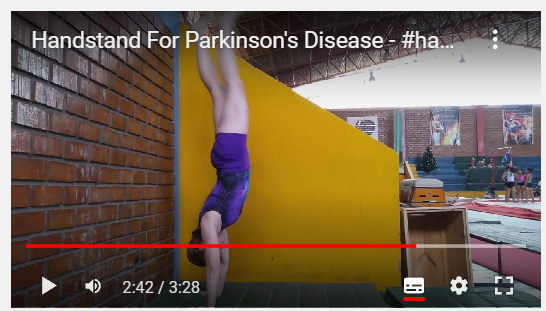
Christine Jeyachandran: 9 years ago at age 37, Christine was diagnosed with Parkinson’s disease in Peru where she lived until recently. It started with a slight tremble, weak fingers and led to left foot dragging and difficulty walking without medication. Gymnastics has changed her life completely and empowered her physically and mentally. Her video Handstand for Parkinson’s was a finalist at the World Parkinson Congress.

Finalist for video Competition 5100+ views
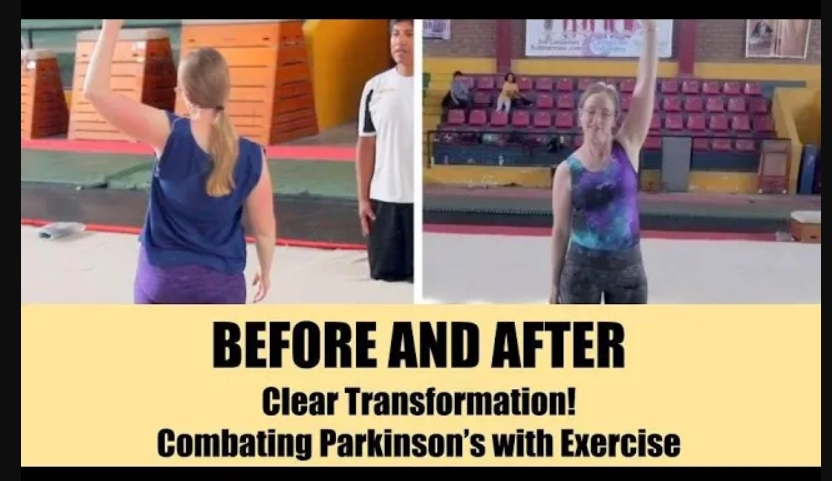
She regained range of movement, balance, flexibility, coordination, and she’s stronger than ever. And her video Before and After shows a huge contrast in how it has changed the way she moves.
In April 2020, Christine edited a video: What are the benefits of exercise?. This shows the amazing stories of 13 people with Parkinson’s from around the World who swear by and implore people with Parkinson’s to exercise with determination and intensity, an apt message during COVID19. Parkinson’s disease never takes a day off.  Video thumbnail: What are the Benefits of Exercise? Parkinson’s secrets to living successfully. Video I of II
Christine herself had to “overcome apathy, doubts, fatigue, and fear” in training gymnastics so she wanted to help others understand the benefits went beyond her story and are worth the effort. This video comes with a sequel discussing “What keeps you motivated” as we know motivation is a big challenge for those with Parkinson’s too! This project was featured in Parkinson’s Life, online magazine.
The video – Would you sell your house to save your mother? Has been had amazing feedback (see poster below) and exposure and was a top 5 in a popular vote for the Focus on Ability Video Competition last year. It has over 44 amazing comments just on their site and many more through social media. It challenges the world to see the needs within the Parkinson’s Latino community.   

Finalist in Focus on Ability Film Festival


I have many videos on my youtube channel.  Please SUBSCRIBE to my youtube 

I’m am amateur video maker but I’m learning so much and I do it to educate people about Parkinson’s most of all so forgive the small errors you might see.

¿Cuáles son los beneficios del ejercicio? Los secretos de 

Parkinson para vivir con éxito. Video 1

What keeps you motivated? Parkinson’s secrets to living 

successfully! Video II of a II part series

What are the Benefits of Exercise? Parkinson’s secrets to living successfully. Video I of II

La perseverancia Ejercicios y Parkinson.

Antes y Después – Christine usaba gimnasia artística para combatir el Parkinson

Homenastics – Hogar-nasia

¿Que es la enfermedad de Parkinsons?

Walk Normally – Christine’s Journey with Parkinson’s #uniteforparkinsons
Made for World Parkinson’s day in April 2018.

One Voice. One Day. This is Christine’s .  #Uniteforparkinsons short version edited by World Parkinson’s Day team.

People all around the world talk about their Parkinson’s #Uniteforparkinson’s official video edited by World Parkinson’s Day team. Parts of my video appear in it.

We are hoping to make more videos in the future and especially in Spanish. If you look you can find Spanish subtitles for the Walk Normally video.

Esperamos hacer más videos en el futuro y especialmente en español. Si busca, puedes encontrar subtítulos en español para el video Walk Normally.